What 45V standoff and 72.7V clamping mean for telecom line protection
The 5.0SMDJ45CAS is a unidirectional Zener-based TVS diode — it clamps the line to 72.7 V maximum when a transient exceeds the 45 V standoff threshold, absorbing a 10/1000 µs peak pulse current of 61.9 A without degradation. That 5 kW peak pulse rating is the headline figure, but for telecom board designers the practical question is whether the clamping voltage stays below the downstream IC's absolute-maximum input rating under the worst-case surge profile — the 50 V minimum breakdown is the floor, and the 72.7 V clamping ceiling is what the protected rail actually sees during an event.
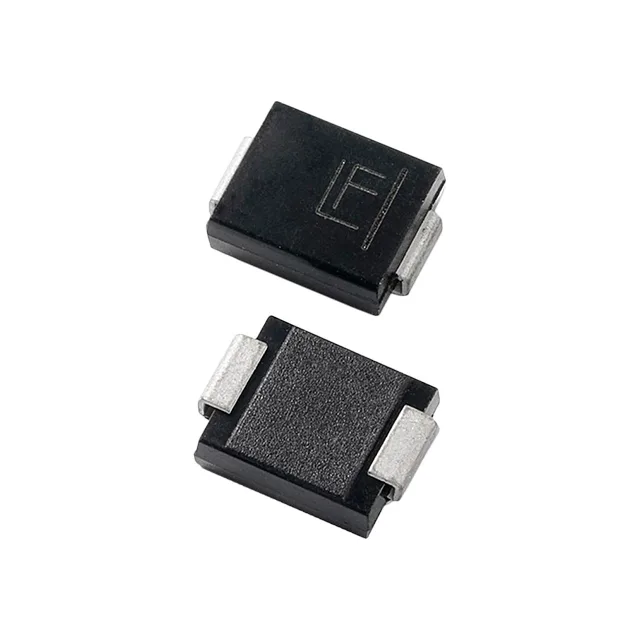
DO-214AB SMC package for telecom board assembly
Surface-mount DO-214AB (SMCJ pinout) — the industry-standard footprint for telecom line-card protection, compatible with standard reflow profiles and compatible with the pin-compatible siblings in the 5.0SMDJxxS series. Operating junction temperature runs from -65 °C to 150 °C — the wide cold end covers outdoor cabinet deployments in climates where the enclosure drops below freezing, and the high top end gives margin against self-heating during extended clamping events.
Telecom application and sourcing posture
Listed for telecom applications — TVS diodes on this series protect against lightning-induced transients and switching surges on line interfaces, power supply rails, and data ports in telecom infrastructure equipment.