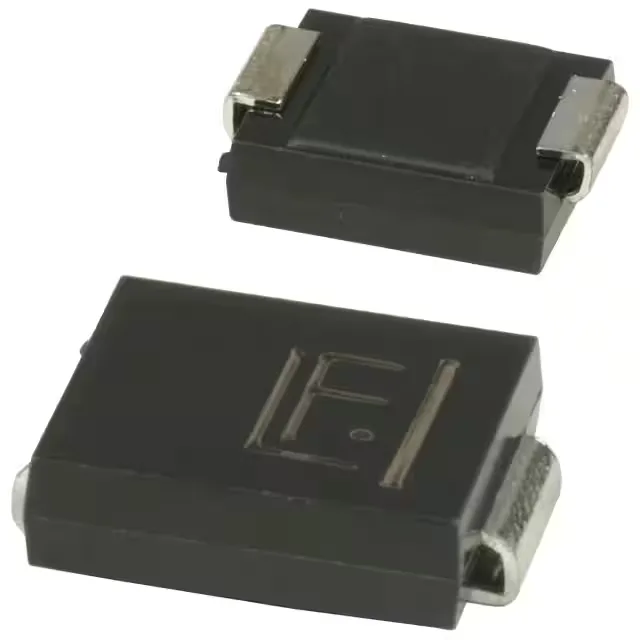
What the 5.0SMDJ15CA-T7 is and what it protects
The 5.0SMDJ15CA-T7 is a bidirectional Zener-based TVS diode in the SMC (DO-214AB) package, specified for 5000W peak pulse power at a 10/1000 µs waveform — the standard telecom surge test shape. With a typical reverse standoff of 15V, it sits inactive across the normal operating rail and activates only when a transient exceeds the 16.7V minimum breakdown threshold, clamping at 24.4V maximum under the 205A peak pulse current. The clamping voltage window — 16.7V breakdown floor to 24.4V clamp ceiling — determines what the downstream circuitry actually sees. For a 15V rail this means roughly 9V of headroom under surge before the clamp engages, and the 24.4V ceiling keeps CMOS logic and PHY inputs within their abs-max rating.
Junction temperature and telecom deployment
Rated junction temperature runs from -65°C to 150°C — the wide cold end covers outdoor cabinet and unenclosed shelter environments where a telecom power shelf can drop below -40°C on a winter night. The 150°C upper limit is the junction, not ambient, so the actual board-level derating depends on thermal resistance from junction to ambient through the SMC pad and copper plane. The listed application is telecom — the 15V standoff maps directly to 12V and 15V telecom rail protection, typically on the DC power input or the data-line supply rails feeding DSLAM line cards and fiber ONT hardware. The bidirectional configuration covers both polarities of induced lightning surge on ungrounded twisted-pair segments.
Sourcing posture and storage
Reels stored outside a dry cabinet will absorb moisture; if the assembly house reflows without a proper bake step, delamination and popcorn cracking are real failure modes. If you stock reels on the shelf, a desiccant pack and humidity indicator card are the minimum.