What the clamping specs mean for your transient-suppression design
The 1N6278ARL4G: The 17.1 V reverse standoff is the DC working voltage the protected node can sit at continuously without the Zener conducting. For a 17 V rail this gives roughly 0.1 V of margin before conduction — a tight standoff-to-breakdown ratio that makes Mosorb suitable for transient suppression on rail voltages close to the Zener knee. The 19 V minimum breakdown voltage sets the lower bound of the Zener conduction onset — the device is guaranteed not to clamp below that threshold. In practice the breakdown knee sits above 19 V so the protected rail sees a clean clamping plateau once the transient exceeds the standoff limit.
Where a DO-201AD axial TVS lives in the system
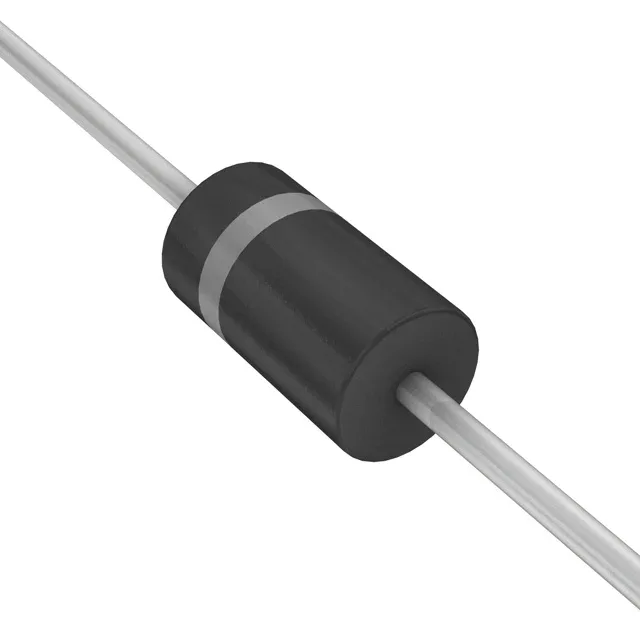
Through-hole DO-201AD is the legacy through-board package for medium-power Zener and TVS diodes — the axial leads plug into a PCB and are wave-soldered or hand-soldered at assembly. The Mosorb series is a general-purpose transient-suppression line, so the part appears in power-supply input stages, motor-drive snubber rails, and industrial control panels where board-level TVS protection is specified at the PCB level rather than at the enclosure port. For a through-hole part this also means the thermal cycling margin between the junction and the lead-plane is substantial enough for equipment that sees wide ambient swings.
Sourcing posture for the 1N6278ARL4G
The base part number 1N6278A refers to the same die in the same DO-201AD package, so check whether a currently-active 1N6278A reel or ammom reel is still held by an authorized distributor as residual stock before committing to independent surplus. Independent surplus channels are the primary route for this order code — quantities are lot-specific, traceability varies by vendor, and the unit price on a broker quote reflects the shortage premium for an obsolete Zener in a common through-hole package rather than a published list price. Confirm the full reel quantity and datasheet revision before quoting into a BOM.