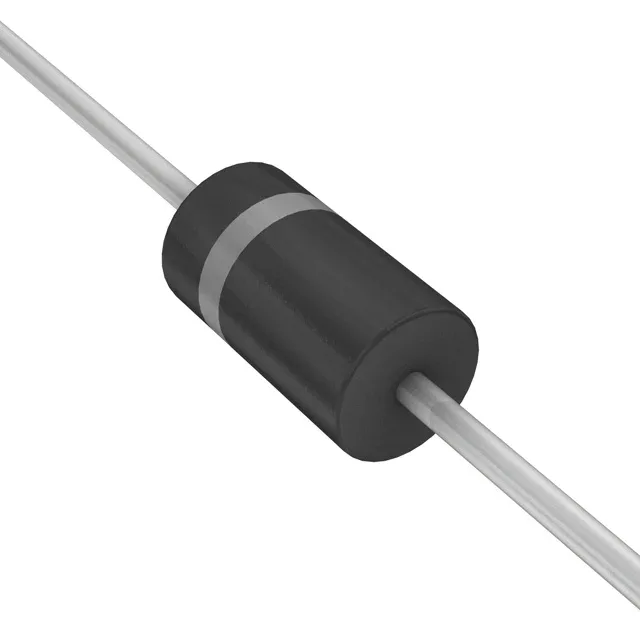
The 1N6275AG: The 1.5 kW peak pulse rating is not a continuous figure — it is the maximum energy the device will absorb during a single transient event, typically an IEC 61000-4-5 surge waveform. At that energy level the clamping voltage reaches 21.2 V maximum, which is what the downstream circuitry sees during the event rather than the raw surge voltage at the input.
Clamping versus standoff — the protection window
Reverse standoff of 12.8 V typ means the TVS sits invisible to the circuit during normal operation, drawing only leakage current. This 7 V window between breakdown and clamping is the energy-absorption headroom — the tighter it is, the less stress reaches the protected node. The distinction matters for design: unlike a Zener used for regulation, this part is optimised for crowbar-type clamping. It is not in regulation at 12.8 V — it sits open until the transient arrives, then it switches hard into avalanche to absorb the surge energy.
Junction temperature and environment
The -65°C to 175°C junction temperature rating places this device in the high-reliability tier of TVS diodes — 175°C TJ is well above what most commercial or even industrial Zener TVS parts specify. The DO-201AD axial package and through-hole mounting suit board-level integration where the lead length contributes to thermal relief on repetitive pulses. General-purpose classification means it is not radiation-hardened or specially screened for defence — the wide temp range reflects the diode junction physics rather than enhanced screening. For aerospace or defence programmes requiring JAN or MIL-PRF-19500 screening, a different part number in the same Mosorb family would be needed.
Sourcing and lifecycle
This is a last-time-buy window situation: existing stock, if any, circulates through independent and surplus channels. Confirming lot traceability and functional test data at RFQ is the primary vetting step before committing to a BOM position on a discontinued Zener TVS.