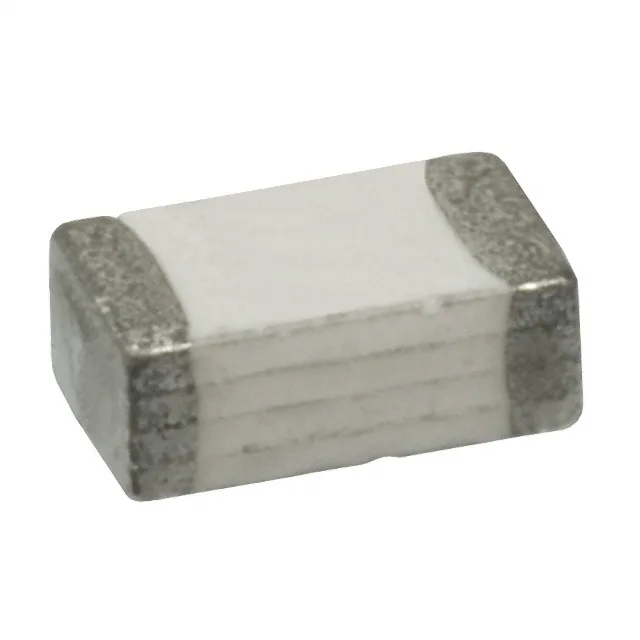
Obsolete — sourcing reality for the 8 A slow-blow SMT fuse
The 1206SFS800F/24-2: Any replacement requires a parametric match: 8 A current rating at 24 VDC, slow-blow response time, and a 1206 SMT footprint. The 60 A breaking capacity at rated voltage is the interrupt rating — confirm the prospective fault current in your circuit stays below this.
8 A, 24 VDC, 60 A breaking capacity — what these ratings mean for fit
Rated 8 A continuous at 24 VDC — this is the nominal current the fuse carries without opening under normal conditions. The slow-blow characteristic with a melting I²t of 16.9 means it tolerates short-duration inrush pulses (capacitor charging, motor start, hot-swap) without nuisance opening, unlike a fast-acting fuse of the same current rating. The 60 A breaking capacity at 24 VDC is the maximum fault current the fuse can safely interrupt. If your circuit's prospective short-circuit current exceeds 60 A at 24 VDC, this fuse is not adequate — the arc may not extinguish cleanly. The 0.009 Ohm DC cold resistance is low enough that voltage drop at 8 A is under 75 mV, negligible for most low-voltage DC rails. The fuse's current-carrying capacity derates at elevated ambient; above 85°C the 8 A rating should be reduced per the manufacturer's derating curve (not reproduced here). UL recognition confirms the fuse meets UL 248-14 for supplemental overcurrent protection.
1206 SMT package — board-fit checklist
Surface-mount placement with tape-and-reel packaging — the reel quantity is set by the manufacturer's standard pack, typically 3000 or 5000 pieces per reel for 1206 fuses. Confirm the reel count with your order quantity. The 1206 footprint is a mature, widely supported SMT package — no tombstoning risk with standard reflow profiles. The 0.97 mm seated height is within the typical clearance envelope for a 1.6 mm PCB with bottom-side components. No special baking or moisture handling is required beyond standard MSL 1 practices for ceramic-body fuses.