Clamping and standoff — what the numbers mean for the protected rail
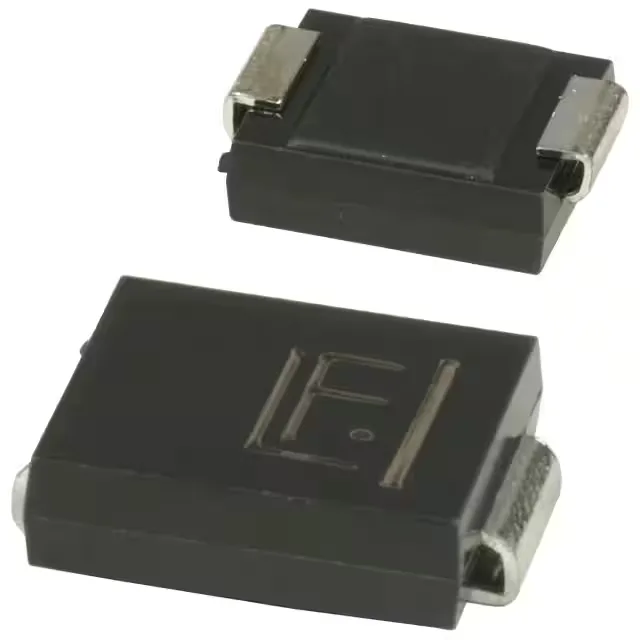
The 1.5SMC91C: The reverse standoff of 77.8 V sets the continuous working voltage the TVS sees in normal operation — above this the device begins to conduct and clamp. For a 77.8 V rail that needs headroom to 131.25 V, the protected node sees a voltage ratio of roughly 1.69× during the event — a meaningful let-through for sensitive downstream stages that need tighter budgets, so confirm the downstream absolute-maximum rating clears 131.25 V before committing this part to the design. The 1.5 kW peak-pulse rating defines the energy the device can absorb once per the 10/1000 µs surge waveform — this is the Littelfuse 1.5SMC series transient-surge capability, appropriate for industrial AC mains protection and secondary clamp roles where the energy window is well-defined.
Junction temperature and the -55 to 150 °C window
Rated to 150 °C junction, the 1.5SMC91C sits in the upper tier of the 1.5SMC family thermal range. The -55 °C cold start matters for outdoor and equipment-bay deployments where the TVS sees startup transients before the enclosure warms — a cold-clamped surge behaves differently from one at elevated ambient, and the wide window gives margin for both cases.
Sourcing an obsolete Littelfuse 1.5SMC part
The 1.5SMC91C carries an Obsolete product status — Littelfuse has formally discontinued this order code. No authorized stock remains through the regular distribution channel; independent and surplus sources hold what is available, and lot provenance matters more than it does for an active line. Quote through an RFQ to confirm genuine date-code stock before scheduling a build — a TVS that has sat unprogrammed in a warehouse for years after the last-time-buy window may have been subjected to uncontrolled storage conditions that degrade the junction characteristics.