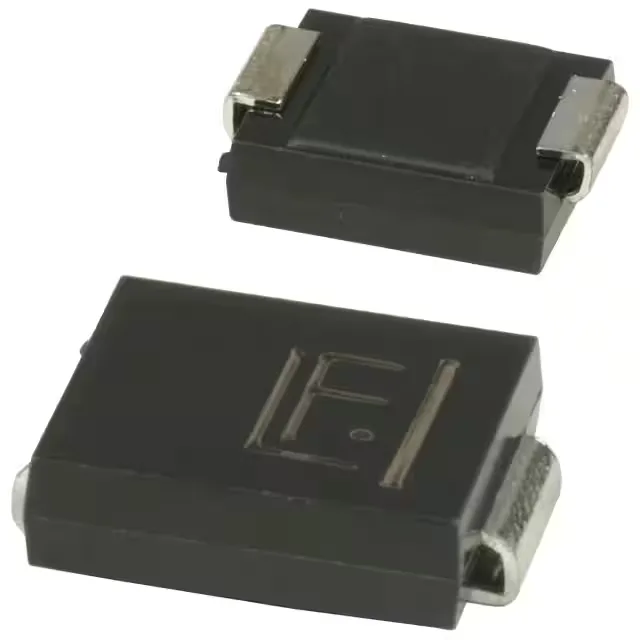
What the 1.5SMC9.1CA does and where the clamping window sits
The 1.5SMC9.1CA is a unidirectional Zener-based transient voltage suppressor in the 1.5SMC series — the 7.78 V reverse standoff is the working rail the protected circuit sees under normal conditions, and anything above 8.65 V breakdown initiates clamping. The 13.4 V maximum clamping voltage at the 113.4 A peak pulse rating tells you the suppressor handles a substantial surge current without collapsing the protected rail — the gap between 7.78 V and 13.4 V is the transient budget the downstream load must survive. At 1500 W peak pulse power the part is sized for secondary protection in power supplies, telecom rails, and industrial I/O — places where a 10/1000 µs surge event is the realistic threat, not the 8/20 µs lightning surge that demands a heavier 5 kW part. The 1.5 kW rating at the standard 10/1000 µs waveform is the Littelfuse datasheet figure; verify the waveform in your actual fault environment before committing.
Temperature grade and the DO-214AB package in production
The DO-214AB (SMCJ supplier package) is a standard surface-mount body; the cathode band marks the cathode end, and the recommended solder profile follows JEDEC J-STD-020 for moderate peak reflow temperatures — check the landing pad footprint against the datasheet footprint drawing before spin. Mounting is surface mount; tape-and-reel and cut-tape packaging are both listed, so the part suits both high-volume assembly and low-quantity rework. Watch the moisture sensitivity level for the SMC package if you are reflowing after long shelf storage — the datasheet IPC/JEDEC MSL rating applies if the reel has been open.
Active production — what that means for your BOM line
That puts it on the stable side of the lifecycle spectrum — the 1.5SMC series is a long-run Littelfuse line, but any part with a single-source OEM manufacture carries inherent supply risk that a second-source alternative mitigates at RFQ. The 1.5SMC base part number covers a wide voltage window; if you are cross-shopping siblings at different standoff voltages, confirm the exact 9.1 V rating before swapping.