Standoff and clamping — the two numbers that matter
With a 70.1V typical reverse standoff voltage, the 1.5SMC82CA sits idle in the circuit at normal operating conditions, presenting a high impedance to the supply rail. It does not crowbar the bus — it watches and waits. When a transient event exceeds the 77.9V minimum breakdown threshold, the device switches to conduction in picoseconds and clamps the peak voltage across the load to 113V maximum at 13.5A peak pulse current. That 113V ceiling is the number that protects downstream circuitry — the sensitive node never sees more than that, regardless of how hard the surge hits the front end.
Peak pulse rating — 1500W in the 1.5kW class
The 1500W peak pulse rating (10/1000µs waveform) is the standard spec for this SMC-package class. The 13.5A rating is the current the device can pass at that waveform while holding the clamp voltage — use it to calculate the let-through energy budget on the upstream protection upstream of this TVS.
Temperature and environment
Rated for junction temperatures up to 150°C, the part survives the thermal soak from a clamped surge without entering thermal runaway — the derating curve in the Littelfuse datasheet governs the allowed pulse repetition rate at elevated ambient. No power-line-protection rating is listed — this is a board-level transient suppressor, not an AC-mains protection device. It protects a DC rail or a signal node, not the line input.
Package and sourcing
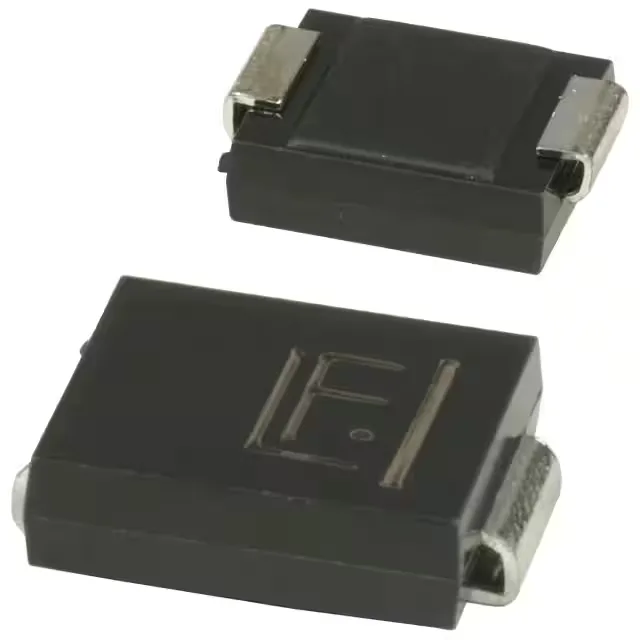
The DO-214AB (SMCJ) package is the industry-standard SMC footprint — multiple manufacturers offer drop-in alternatives in this pin-compatible outline. Surface-mount reflow profile is standard; no special orientation concerns since the bidirectional part has no polarity marking beyond the cathode bar.