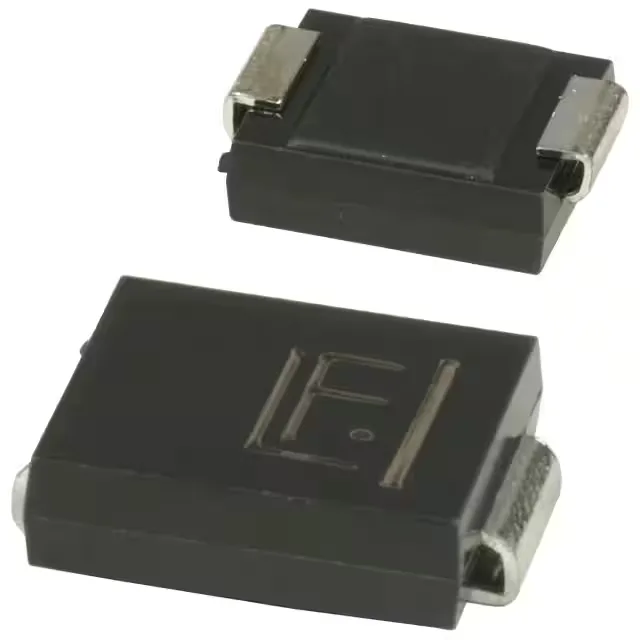
1500W peak pulse — what that rating means in practice
The 1.5SMC7.5CA clamps transients at 11.3V maximum when hit with a 10/1000µs surge waveform at 134.5A peak — that is the clamping voltage the downstream circuit sees if the surge reaches the diode's current-handling limit. The standoff voltage of 6.4V sets the working rail ceiling: the diode stays idle up to that level and activates above 7.13V breakdown. For a 5V or 12V rail, the 6.4V standoff gives comfortable headroom above normal operation while catching fast-edge transients before they reach the clamping ceiling. Bidirectional — the CA suffix means it clamps symmetrically in both polarities, so it protects differential signal lines, AC-coupled rails, or any node that sits at a floating or bipolar potential. A unidirectional UA variant of the same series would only block one polarity and leave the opposite direction unprotected.
DO-214AB SMC package and the 1.5SMC series context
The 1.5SMC series delivers 1500W (1.5kW) in the DO-214AB (SMCJ) footprint — the same body size as the common SMCJ TVS family. The surface-mount SMCJ-style body mounts flush to the PCB pad; the large die-to-heat-sink thermal path within the package is what lets it absorb the 134.5A pulse without the junction temperature exceeding 150°C. The low end covers cold-start and outdoor winter deployment; the high end leaves margin against self-heating during a sustained surge event.