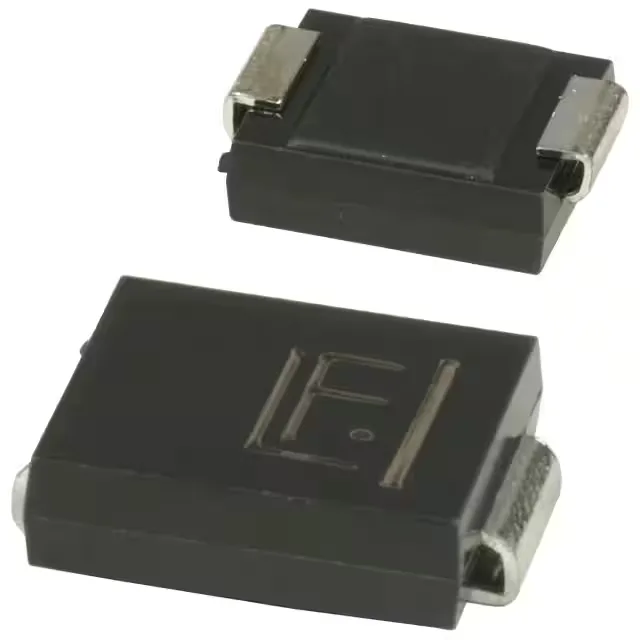
What 1500W peak pulse means for transient protection
The 1.5SMC68: The 96.6 V clamping ceiling at 16.5 A peak is the spec that governs what reaches the protected load: downstream MOSFET gates, op-amp inputs, or communication bus transceivers see no more than 96.6 V during the surge event. The reverse standoff voltage of 58.1 V typ sets the dc working voltage the TVS sees in normal operation — below this it presents a high impedance and draws only leakage current. When the transient pushes the line above the 61.2 V minimum breakdown, the device avalanche-clamp kicks in and returns the line to below 96.6 V within the 10/1000 µs response window.
Industrial temp grade and board-fit realities
Operating junction temperature runs to 150°C max, which puts the -55°C lower bound in play for cold-start and high-altitude deployments — the same thermal envelope covers under-hood automotive, outdoor telecom power, and industrial motor-drive enclosures. Surface-mount termination on a DO-214AB land pattern demands the standard three-solder-pad footprint; the cathode bar on the SMC package marks the protection direction — the anode side faces the protected line, and that orientation is non-negotiable for unidirectional operation.
Sourcing status — obsolete, not gone
The 1.5SMC68 carries an Obsolete product status — this is a Littelfuse-end-of-life part, not an active line. No official successor order code appears in the current cross-reference record; sourcing runs through independent and excess-inventory channels where available lot quantities are confirmed at RFQ. The 1.5SMC series family footprint and clamping chain are well-populated with active alternatives, but a pin-compatible replacement with identical standoff and clamping ratings requires checking the current series revision — board-level fit is the same DO-214AB, but the datasheet revision must be verified for the protection scheme to hold.