What the 1500 W rating means for the board
The 1.5SMC180: The 258.3 V clamping voltage at 6.2 A peak pulse current (10/1000 µs waveform) defines the maximum voltage the downstream circuitry sees during a surge event — a critical number for selecting downstream capacitor voltage ratings and MOSFET Vds margins.
Obsolete — sourcing through independent channels
Littelfuse has marked the 1.5SMC180 as Obsolete. No official successor or second-source part number is recorded in the manufacturer's lifecycle documentation. For a BOM line that requires a guaranteed supply path, a form-fit-function evaluation against an active TVS diode with the same DO-214AB footprint and 154 V standoff is the practical next step.
DO-214AB SMC — board-fit note
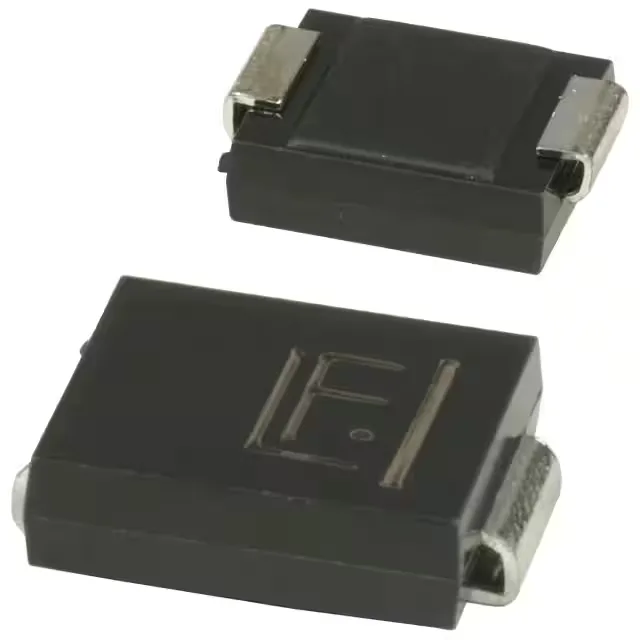
The 1.5SMC180 is supplied in a DO-214AB (SMC) surface-mount package, also designated as the SMCJ footprint. The wide-body SMC package is sized to handle the 1500 W pulse without lifting the leads — the copper pad area under the cathode tab sets the thermal impedance for repetitive surge events. The -55°C to 150°C junction temperature range covers most industrial and telecom environments, though the 150°C TJ limit means the average power dissipation in a hot enclosure must be checked against the derating curve.