What the clamping voltage means for your 48V bus
The 1.5SMB56CA: The 47.8V reverse standoff voltage means it sits across a nominal 48V telecom bus without conducting in normal operation — the device only starts avalanching when the line exceeds 53.2V (minimum breakdown). When the transient hits, the diode clamps at 99.5V maximum while shunting 108.4A peak pulse current. For a 48V DC-powered base station or router card, this clamp voltage is the ceiling the downstream DC-DC converter's input MOSFETs must survive — if the converter's abs-max rating is below 100V, this part provides adequate protection margin.
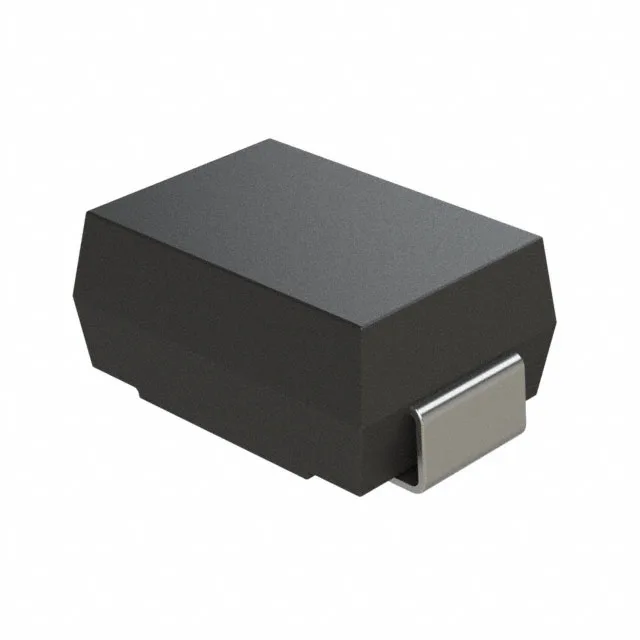
Package and board-fit for the DO-214AA footprint
Housed in the DO-214AA (SMB) package, the 1.5SMB56CA is a surface-mount device with a standard JEDEC footprint. The cathode band is marked for polarity identification, though as a bidirectional part either orientation works in the circuit. The operating junction temperature range spans -65°C to 150°C, covering telecom outdoor cabinets and industrial enclosures where ambient temperatures can reach 85°C. The 1500W peak pulse rating is derated above 25°C per the standard thermal derating curve — at 100°C ambient, the effective peak pulse power drops to roughly 75% of the 25°C rating.