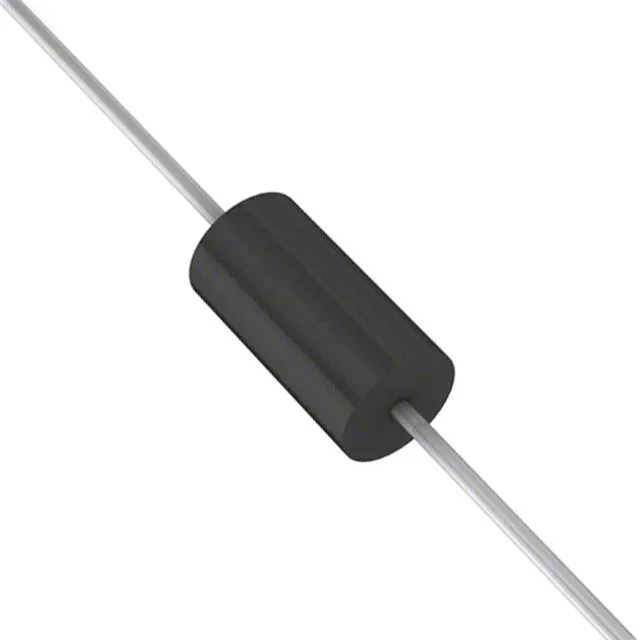
What the 1500W peak pulse rating means on the bench
The 1.5KE9.1CA-B: That 1500W figure is the non-repetitive rating — it tells you the device can absorb a single surge of that energy without failing short, but it is not a continuous dissipation spec. On a repair bench, this is the part that clamps a 7.78V rail (reverse standoff) so the downstream ICs see no more than 13.4V during the event. The 113.4A peak pulse current at the clamping voltage means the diode shunts that much current into ground during a transient. If the board trace feeding it cannot handle that peak, the trace opens before the diode does — so the layout around the DO-201 leads matters as much as the part rating.
Breakdown and clamping — the actual protection window
Minimum breakdown voltage is 8.65V; the device starts conducting in avalanche at that point. The 7.78V standoff is the maximum DC voltage the diode will not clip — so a 5V or 3.3V rail is safe, but a 12V rail sits above standoff and the diode would conduct continuously and fail. Clamping at 13.4V means the protected circuit sees no more than that during the pulse. For a 12V nominal bus, that is tight enough to keep downstream FETs inside their Vds rating. The bidirectional channel handles positive and negative transients symmetrically, which is useful on AC-coupled signal lines or floating supplies.
Package and temperature range — through-hole survivability
DO-201AA / DO-27 axial leaded package, through-hole mount. The junction temperature range is -55°C to 175°C, so it handles the thermal spike from soldering and the self-heating during a pulse without derating at the board level. Bulk packaging means the parts ship loose in a bag or tube — no tape-and-reel for automated pick-and-place. Hand-insertion or wave-solder assembly only.
Sourcing and lifecycle — active, no cross-reference on record
No stock-holding claim — each RFQ is handled individually.