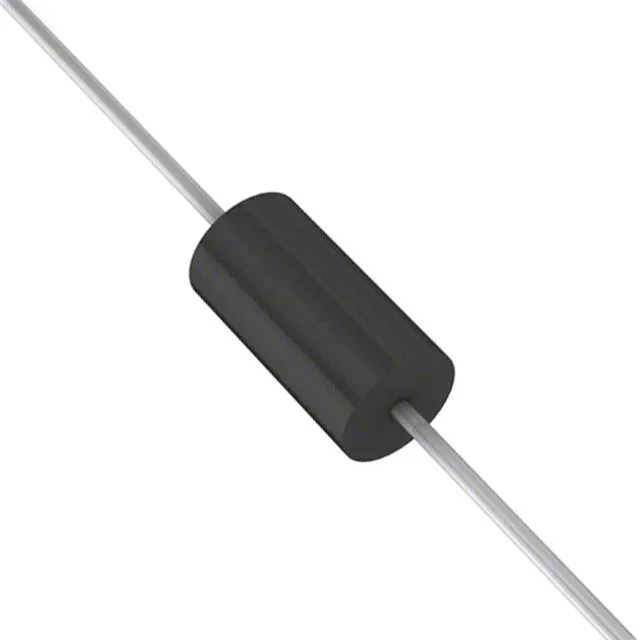
What the 1500 W peak pulse rating means for your protection design
The 1.5KE75CA: That energy rating assumes a 25 °C starting junction; at 175 °C the derating curve drops to roughly 75 % of the 1500 W rating, so a hot-running board needs a wider margin or a higher-power device. The 64.1 V reverse standoff voltage means the diode stays off below that rail — a 48 V nominal bus with 20 % tolerance (57.6 V max) still sits below the standoff, so the TVS does not leak appreciably during normal operation. The 71.3 V minimum breakdown voltage confirms the avalanche threshold starts above the bus tolerance band.
Obsolete — sourcing reality for the 1.5KE75CA
The DO-201AA axial package and bidirectional Zener construction are standard across the 1.5KE family, so a parametric replacement (same standoff, same pulse rating) from the same series or a competitor's equivalent is the typical migration path — but no pin-compatible cross-reference is documented here.
Temperature range and deployment environment
A TVS in an outdoor telecom rectifier or an engine-bay ECU sees ambient well below 125 °C, so the junction stays within the derated pulse-power envelope. The DO-201 leaded package handles the thermal cycling without solder-joint fatigue that a surface-mount part might show.