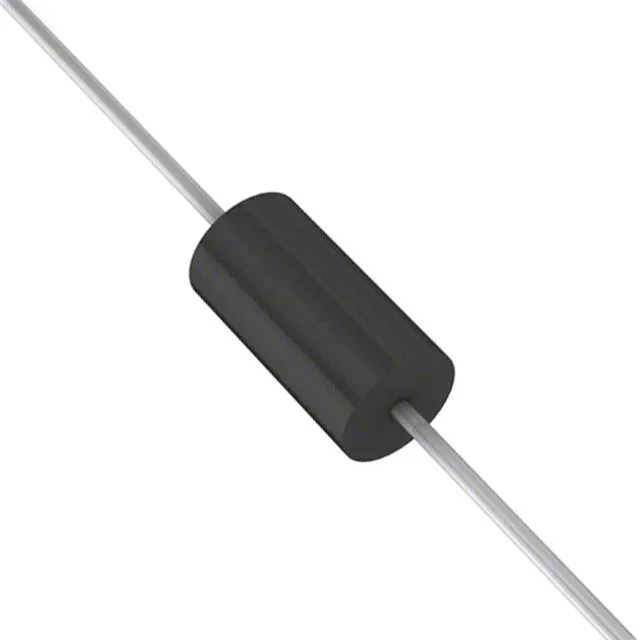
Surge protection for 400V-class DC rails
The 1.5KE550CA-B: Its 468V reverse standoff voltage means it sits across a DC bus up to that level without conducting leakage current, then clamps transients at 760V maximum when the surge hits. This suits it for protecting 380V to 400V nominal DC buses common in industrial power supplies, three-phase rectified rails, and solar inverter DC links.
What the ratings mean for the BOM line
The 2A peak pulse current at 10/1000µs is the surge the device can repeatedly absorb without degradation — a 760V clamp across a 400V bus means the TVS shunts the excess energy as heat, and the 1500W peak power rating tells you the junction can handle that pulse without exceeding the 175°C maximum junction temperature. The DO-201AA axial package (also known as DO-27) is a through-hole leaded form factor — the copper leads conduct heat into the PCB pads, so the board copper area under the mounting holes sets the thermal resistance for continuous operation. Power line protection is marked as 'No' — this is a secondary-side transient suppressor, not a primary AC mains protector. It belongs downstream of a fuse or breaker, across a DC rail or signal line where the 468V standoff matches the normal operating voltage.
The part is classified under Circuit Protection in the Littelfuse 1.5KE series, a long-running TVS diode family with a well-established footprint. For BOM compliance verification, the manufacturer typically provides RoHS, REACH, and UL recognition documentation upon request — confirm the specific certification revision needed for your market at the time of ordering.