What the 1500 W peak pulse rating means for a 460 V bus
The 1.5KE540A-B: This means it clamps a 460 V nominal DC bus — the reverse standoff voltage — to a maximum of 740 V at a peak pulse current of 2 A, absorbing a 1.5 kW transient without failing open or short. The 513 V minimum breakdown voltage gives the designer a clear trigger threshold: below that the diode stays off, above it the Zener avalanches and holds the clamp. The 175 °C maximum junction temperature means this part survives repetitive transients in hot environments — think outdoor power supplies or industrial motor drives — as long as the average power stays within the thermal derating curve.
Package and board integration
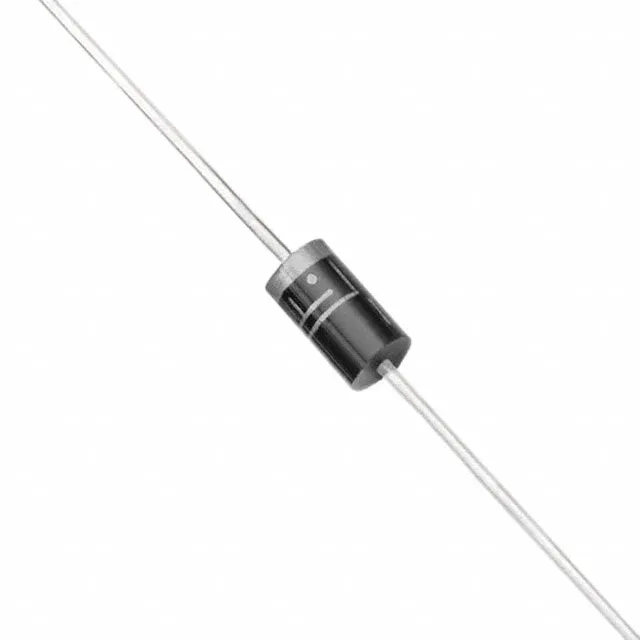
Housed in a DO-201AA (DO-27) axial-lead package, the 1.5KE540A-B is a through-hole part that drops into a 0.052-inch diameter hole on a standard FR-4 board. The axial leads handle the thermal expansion of a large copper pour on the cathode tab, which is the primary heat path for the 1500 W pulse. The bulk packaging means these ship loose in a tube or bag, not taped and reeled — fine for prototyping or low-volume production, but a line feeding a pick-and-place will need a tube feeder or manual insertion.