What the 1500 W peak pulse rating means for your protection design
The 1.5KE36A: This is the energy-handling capacity that determines whether the device survives a surge without failing short or open — it is the headline rating for a TVS diode. At the 30.8 V reverse standoff voltage (VRWM), the diode draws negligible leakage current under normal line conditions. When a transient exceeds the minimum breakdown voltage of 34.2 V, the device avalanches and clamps the surge to a maximum of 49.9 V while conducting up to 30.5 A of peak pulse current. This clamping voltage is the figure that matters for downstream component stress — if the protected rail's absolute maximum rating sits below 49.9 V, this part is not a fit.
Package, mounting, and temperature grade
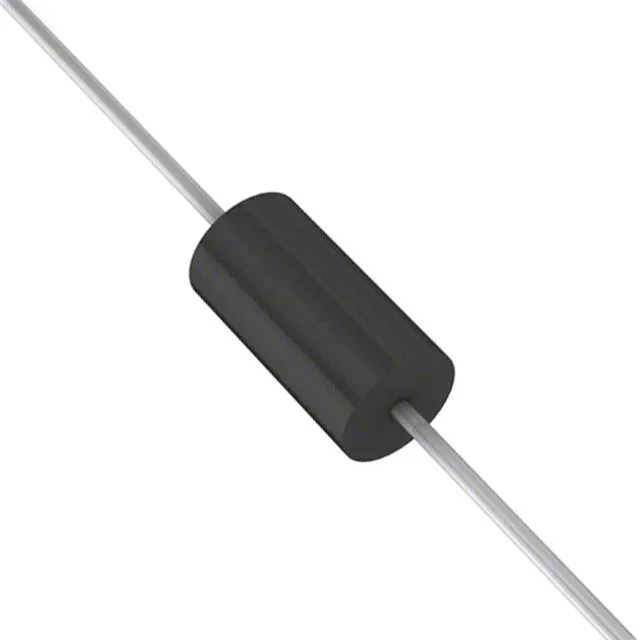
Housed in a DO-201AA (DO-27) axial-lead package, the 1.5KE36A is a through-hole part intended for wave-solder or hand-solder assembly. The axial leads allow it to be inserted into a PCB or wired into a terminal block — common in power supplies, industrial controls, and telecom line cards where a surface-mount TVS might not handle the thermal cycling or board-space constraints. The operating junction temperature range spans -55°C to 175°C, which covers the full industrial and automotive under-hood envelope. Power line protection is not listed as a feature — this is a general-purpose transient suppressor, not a specialized AC-line-rated device.