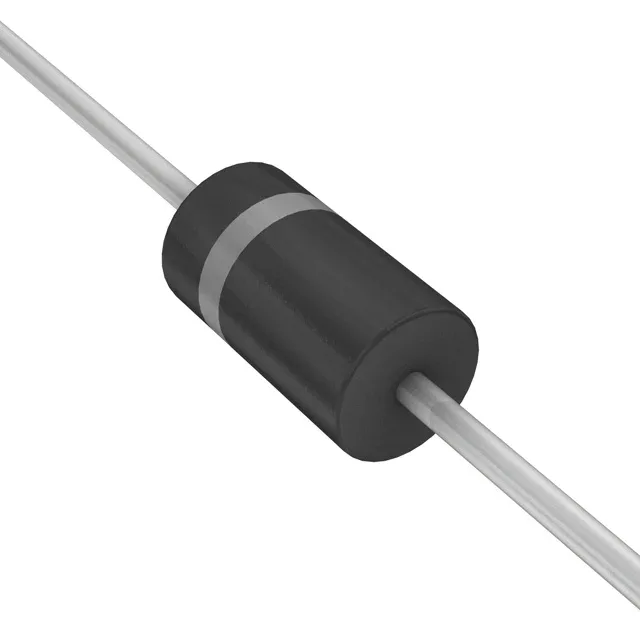
1500 W peak pulse — the rating that decides the protection window
The 1.5KE33ARL4G: That 1500 W figure is the energy-handling ceiling — it tells you how much transient energy the diode can clamp before the junction fails. For a 28.2 V standoff rail, the 45.7 V clamping voltage (max at 33 A peak pulse current) defines the voltage the downstream circuitry must survive.
Obsolete — sourcing through independent channels
Littelfuse has marked the 1.5KE33ARL4G as obsolete. No official successor is listed. The through-hole DO-201AD axial package is a legacy footprint, so a board-level replacement would require a layout change if migrating to a surface-mount TVS.
28.2 V standoff, 31.4 V breakdown — the protection band
The reverse standoff voltage is 28.2 V — the rail voltage the diode sits across without conducting. Breakdown starts at 31.4 V min, and clamping is guaranteed at 45.7 V max at the 33 A peak pulse current. The single unidirectional channel handles one polarity; for AC or bidirectional protection, two devices or a bidirectional part would be needed.
-65 °C to 175 °C — fits harsh thermal environments
Operating junction temperature spans -65 °C to 175 °C, which covers most industrial, automotive, and telecom enclosures without derating concerns. The through-hole axial package (DO-201AD) is a familiar leaded form factor — it hand-solders easily and the leads absorb some mechanical strain in high-vibration settings, though the tape-and-reel packaging suggests it was originally intended for automated insertion.