Device identity and key parametrics
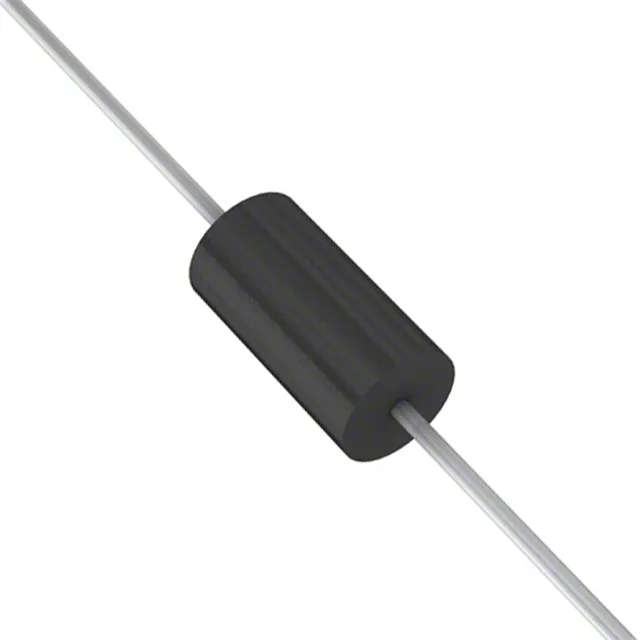
The 1.5KE210CA: A single device clamps transients of either polarity, covering one signal or power pair. Housed in a DO-201AA (DO-27) axial-lead through-hole package, it mounts in standard TVS footprints on boards that tolerate a leaded form factor. The operating junction temperature range spans -55°C to 175°C, suitable for environments from cold-start industrial to under-hood automotive. The part carries no power line protection rating — it is intended for DC bus or signal-line transient suppression, not AC mains clamping.
Lifecycle reality and sourcing posture
Supply runs through independent surplus and broker channels. Lots are date-code specific; provenance and quantity are confirmed at the time of an RFQ. No pin-compatible successor from Littelfuse is documented, so a board-level redesign is the migration path if a replacement is needed.
What the 1500 W rating means for the protection decision
For a given clamping voltage, this translates to a peak current limit — a 210 V breakdown device clamps near 300 V, so the surge current capability is roughly 5 A for a 1 ms pulse. Below that, the TVS shunts the transient and resets; above it, the junction overheats. Bidirectional construction means a single 1.5KE210CA replaces two back-to-back Zeners on a line pair, saving board area and reducing part count. The symmetrical V-I characteristic suits AC-coupled signals or bipolar supplies.