What the 1500W rating means in a real board
The 1.5KE200C: That 1500W figure is the peak power the part can absorb in a single pulse — not continuous dissipation. For a 5.5A peak pulse current, the voltage is clamped at 287.7V max. The 171V reverse standoff voltage means the diode stays effectively open until the line exceeds that level. Once a transient pushes past 171V, the Zener breakdown kicks in and clamps the surge to 287.7V, protecting downstream silicon rated for that peak. No need to orient the part for polarity; it works either way in the circuit.
Field-swap reality — DO-201 axial package
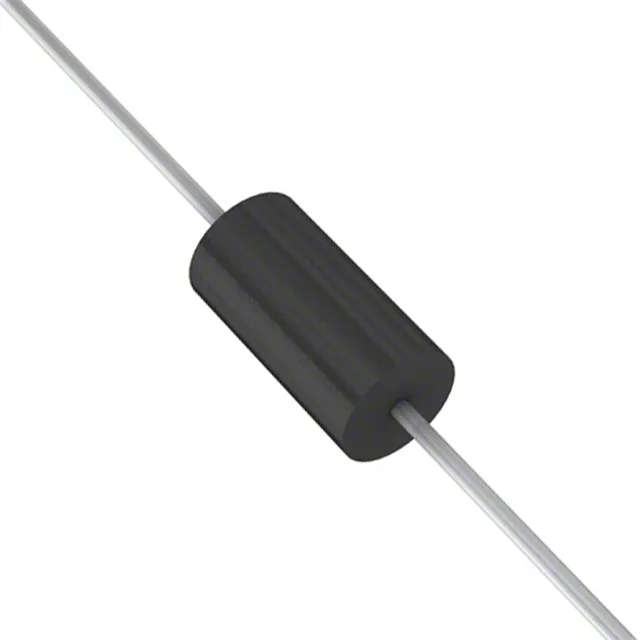
The DO-201AA axial through-hole package is about as field-serviceable as it gets. Two leads, no orientation worries (bidirectional), and a body big enough to read the marking without magnification. You can swap it on site with basic hand tools — no hot-air station, no reflow profile. The wide junction temperature range matches industrial and automotive environments where the ambient can swing hard. Tape and reel packaging is standard for the series, but for a through-hole part in a service kit, you will likely buy cut lengths or loose tubes. The axial leads bend easily into PCB holes or terminal blocks.
Littelfuse lists the 1.5KE200C as obsolete. That means the factory no longer manufactures it, and there is no official last-time-buy window remaining. The part is not available through standard authorized distribution channels. No official successor order code is recorded for this specific variant. If your BOM calls for the 1.5KE200C, the supply route is independent surplus and broker channels. For a replacement in a new design, look at Littelfuse's current 1.5KE series or the 1.5SMC series in a surface-mount package — but verify the standoff voltage and clamping specs match your protection threshold. A board spin may be needed if the package changes.