What the 1.5KE18AG is and why it matters on a repair bench
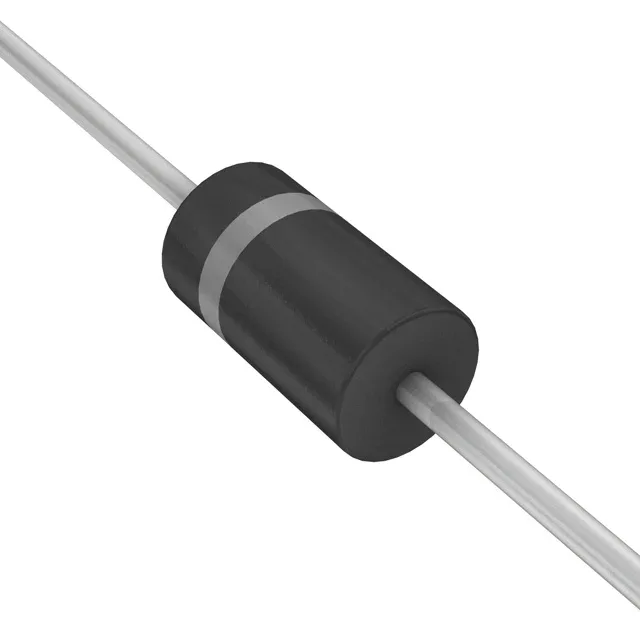
When a surge hits, it breaks down at 17.1 V minimum and clamps at 25.2 V maximum while shunting 59.5 A of peak pulse current (10/1000 µs waveform). That 25.2 V clamp ceiling is the number that decides whether the downstream IC survives — if the protected device's abs-max rating sits below that, the TVS is the wrong pick. This is a unidirectional part — one channel, cathode band on the body — so it protects a single rail against positive-going transients referenced to ground. The DO-201AD axial-lead package means it installs through-hole on a board or terminal strip; the scorch mark on a dead board often traces back to a TVS that took the hit and shorted, saving the rest of the circuit.
Lifecycle reality: obsolete, but still sourcable
The 1.5KE18AG carries an Obsolete lifecycle status from Littelfuse. That means the manufacturer has stopped production — no last-time-buy window remains open. The part is not coming back through the factory channel. For a repair bench or a BOM that already has this on the board, the supply route is independent distribution.
Temperature range and deployment context
That military-grade span covers outdoor telecom cabinets, engine-bay electronics, and downhole instrumentation — anywhere a 15.3 V rail needs transient protection in a harsh thermal environment. The through-hole axial package (DO-201AD) is a workhorse for point-to-point wiring or PCB mounting where the board can tolerate the lead bend. No power-line protection feature is built in — this is a standalone transient suppressor, not a filtered or coordinated protector.