What the 1500W rating means for a protection design
The 1.5KE15C: That 1500W figure is the peak dissipation the die can absorb in a single surge event — it does not mean continuous power. For a 12.8V standoff rail, the device clamps at 22.26V maximum when conducting its peak current of 71.7A. The bidirectional construction means a single DO-201 package protects both polarities against transients — useful on AC signal lines or DC rails where the polarity could reverse during a fault. The breakdown voltage range starts at 13.55V minimum, so the device begins conducting before the rail exceeds the 12.8V standoff by more than about 6%.
Package and thermal environment
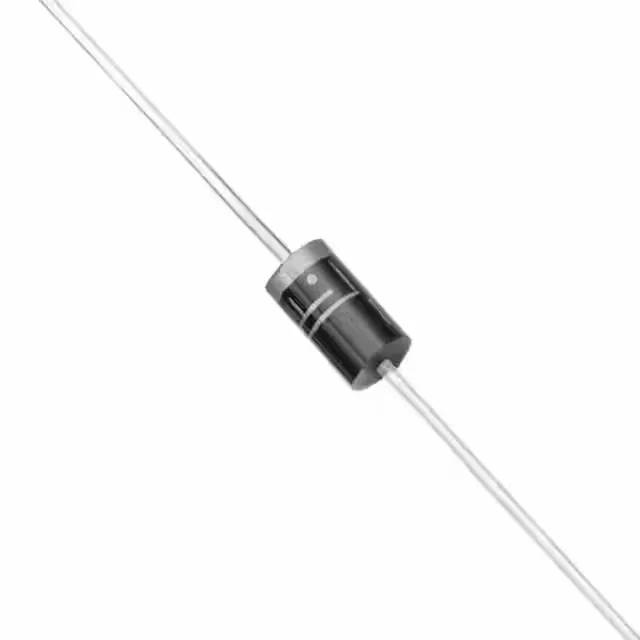
Housed in a DO-201AA axial-leaded package (also known as DO-27), the 1.5KE15C is a through-hole part intended for hand-insertion or wave-solder assembly. The junction temperature range spans -55°C to 175°C, covering industrial and automotive under-hood thermal profiles without derating. The axial leads conduct heat into the PCB copper during a pulse — the 1500W rating assumes a 25°C ambient with the leads soldered into a standard FR-4 board. At elevated ambient temperatures, derate the peak pulse power per the manufacturer's curve, which is not reproduced here but follows the typical 1%/°C above 25°C for silicon TVS dies.
Sourcing an obsolete part — what to expect
Littelfuse lists the 1.5KE15C as Obsolete. No official successor order code is recorded in the lifecycle data — the 1.5KE series has been superseded by newer TVS families with similar ratings but different package options or improved clamping characteristics. For existing BOM lines that call out this exact part number, sourcing runs through independent surplus and broker channels. The DO-201 footprint is common across the 1.5KE family, so a parametric search for a 1500W, 12.8V bidirectional TVS in the same package will yield functional equivalents from Littelfuse and other manufacturers, but pin-compatibility is not guaranteed without checking the replacement's breakdown and clamping voltages.