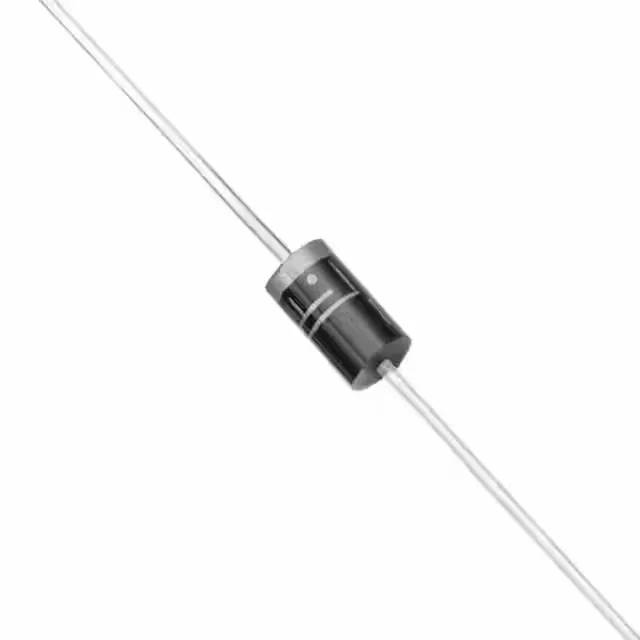
The 1.5KE13C: That 1500 W peak pulse rating means it can absorb a single high-energy surge — like an inductive load dump or lightning-induced transient — without failing short, provided the energy stays within that single-pulse envelope. The reverse standoff voltage of 11.1 V means the diode stays high-impedance below that level, so it won't leak or load a 12 V rail during normal operation. Breakdown starts at 11.75 V min, giving a tight window between normal rail voltage and clamping onset — useful for protecting sensitive downstream ICs on a 12 V bus.
Through-hole DO-201 — field-swappable if you have the iron
Housed in a DO-201AA axial leaded package (also known as DO-27), the 1.5KE13C is a through-hole part. No lab-grade hot-air station needed — a standard soldering iron and desoldering wick or pump is enough to pull it from a board and drop a replacement in. The axial leads are polarity-marked with a band on the cathode end; for a bidirectional part like this one, orientation doesn't matter, which cuts the chance of a reverse-install mistake during a rushed field repair. No power line protection feature — this is a signal or low-power rail TVS, not a mains-grade suppressor.
Obsolete — sourcing reality for the BOM line
Littelfuse lists the 1.5KE13C as obsolete. No pin-compatible drop-in replacement from Littelfuse is documented, so a board-level substitution would require re-qualifying a different TVS part.