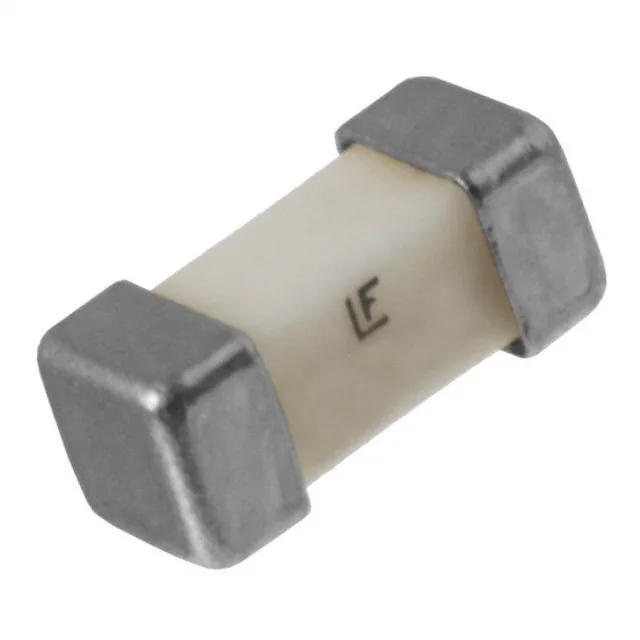
Littelfuse Inc. 0451008.MRSN — Circuit Protection

Littelfuse 0451008.MRSN NANO² 451 SMD Fuse, 8 A, 125 V

MPN0451008.MRSN
Active

Littelfuse Inc. NANO²® 451 series, 0451008.MRSN, Board Mount SMD Fuse, 8 A, 125 V AC/DC, Fast Blow, 2-SMD Square End Block package.

$1.2200Ref. price · indicative, final on quote
Sourced new & surplus through independent channelsAuthenticity-screened · ESD-safe packingListing updated Aug 2026

Specifications

0451008.MRSN specifications
ParameterValue
SeriesNANO²® 451
Fuse typeBoard Mount (Cartridge Style Excluded)
MountingSurface Mount
Voltage rating - AC125 V
Voltage rating - DC125 V
Breaking capacity @ rated voltage50A
Current rating8 A
Response timeFast Blow
Operating temperature-55°C~125°C
Size (Dimension)0.240\" L x 0.106\" W x 0.106\" H (6.10mm x 2.69mm x 2.69mm)
Approval agencyCSA, METI, UR
PackageTape & Reel (TR); Cut Tape (CT)
Melting i2t20.23
Case2-SMD, Square End Block
DC cold resistance0.0077 Ohms

Product details

SMD fuse for 125 V board-level protection

The Littelfuse 0451008.MRSN is an 8 A fast-blow SMD fuse from the NANO²® 451 series, rated for 125 V AC and DC circuits with a breaking capacity of 50 A at rated voltage. Housed in a 2-SMD square end block package measuring 6.10 mm x 2.69 mm x 2.69 mm, it mounts directly to the PCB surface — no through-hole or cartridge-style body.

Current, voltage, and let-through energy

Rated 8 A continuous with a cold DC resistance of 0.0077 ohms — the voltage drop at rated current is under 62 mV, negligible for most 125 V rails. The melting I²t of 20.23 A²s defines the energy needed to open the element; this figure is used to coordinate with downstream semiconductor protection and to size the trace width on the PCB.

Approvals and compliance

Carries CSA, METI, and UR approvals — accepted in North American and Japanese equipment without additional agency review.

Frequently asked questions

What is the breaking capacity of 0451008.MRSN?

50 A at the rated 125 V AC or DC — sufficient for secondary-side protection in power supplies and control circuits where the prospective fault current stays below that level.