Dual-output LDO with 150°C junction rating
The Infineon TLE4470GS is a dual-output positive LDO regulator delivering a 180 mA and a 350 mA rail from a single 45 V max input. Both outputs are adjustable, with a 5 V fixed/tracking configuration on the primary channel — the secondary channel tracks the primary or can be set independently. The 0.5 V dropout at 100 mA and 0.6 V at 200 mA keep the output regulated down to a headroom of a few hundred millivolts, which matters when the battery rail sags during engine cranking.
What AEC-Q100 grade 0 means for underhood duty
Grade 0 means it is certified for the hottest underhood locations — engine control units, transmission controllers, or direct-on-engine sensors — where ambient temperatures regularly exceed 125°C. The 150°C TJ rating gives thermal margin above the 140°C typical absolute-max for grade-1 parts; a hot soak on a summer day after a hard drive still leaves the regulator inside its design envelope.
Protection and supply quality for a 24V nominal bus
The TLE4470GS includes over-temperature, reverse polarity, and short-circuit protection — the three fault modes a regulator sees on an automotive power bus before the load. Reverse polarity protection blocks current when the battery is accidentally reversed, and the short-circuit foldback limits output current during a rail-to-ground fault. The quiescent current sits at 500 µA typical, which keeps the parasitic draw off the battery in key-off standby below the OEM's dark-current budget.
PSRR and noise rejection in the audio band
The power-supply rejection ratio is specified at 60 dB across 20 Hz to 20 kHz — the full audio band. For a regulator feeding an infotainment DSP or a CAN transceiver, this means the 60 dB of attenuation knocks a 1 Vpp ripple on the battery rail down to 1 mVpp at the output. The flat PSRR profile across the band avoids the resonant peaking some LDOs show at switching frequencies.
Package and pinout for the PG-DSO-14 footprint
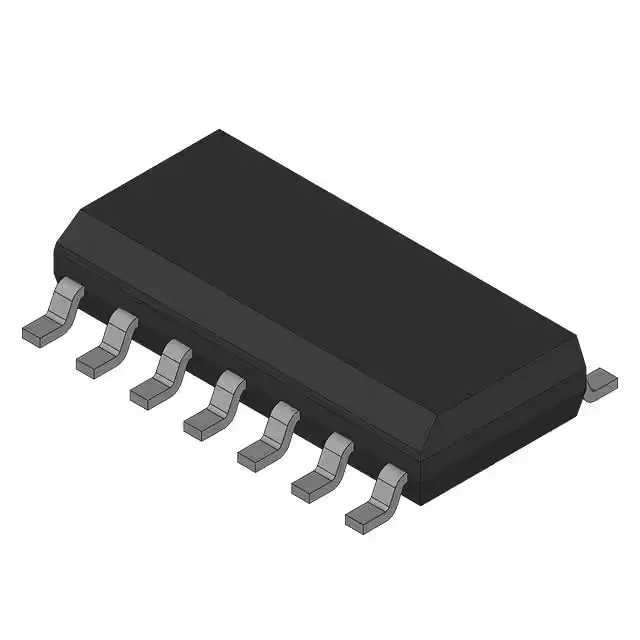
Supplied in the PG-DSO-14 package — the Infineon standard for the 14-lead SOIC wide-body (3.90 mm body width). The exposed paddle on the bottom side conducts heat to the PCB copper plane; a 2 cm² pad on the inner layer drops the thermal resistance enough to stay below the 150°C junction limit at full load. The Enable and Reset control pins allow sequencing of the two output rails — the Reset pin pulls low when either output drops below regulation, giving the system MCU a power-good interrupt.