Why the logic-level gate drive matters for your BOM
Its headline feature is the logic-level gate drive: the maximum Rds(on) of 44 mOhm is specified at 10 V gate drive, but the part is fully enhanced with a gate-source voltage as low as 4 V (the drive voltage range for max and min Rds(on) is 4 V to 10 V).
That figure sets the conduction loss for a given load: at 18 A, expect about 0.8 W dissipation from Rds(on) alone, before switching losses. The 74 nC gate charge at 5 V tells you the driver needs to source and sink that charge each cycle — factor that into your gate-drive power budget if you are switching above 100 kHz. The input capacitance of 1800 pF at 25 V drain-source is moderate; a standard totem-pole driver handles it without excessive ringing.
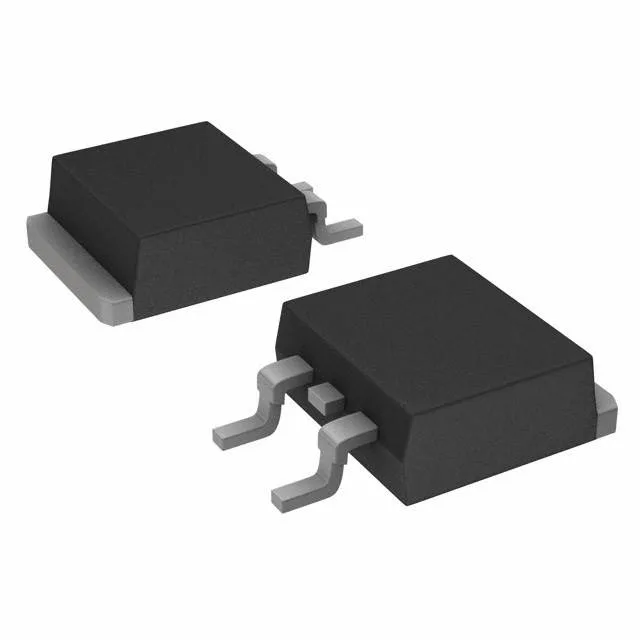
Without adequate thermal management, the junction temperature limits the usable continuous current well below the 36 A headline. The D2PAK footprint is standard for 100 V-class MOSFETs; layout notes: keep the gate trace short and route the drain tab with a wide copper pour.
For production runs, the active status gives confidence for long-term BOM planning — no last-time-buy scramble expected.