Spread spectrum clock generator with PLL — what the 16 MHz ceiling means for your EMI budget
The CY25818SCT is a spread spectrum clock generator from Infineon Technologies, built around an internal PLL that accepts a clock or crystal input and outputs a modulated clock signal up to 16 MHz. Spread spectrum modulation spreads the output energy across a wider frequency band, reducing peak EMI radiated from the clock trace — a common fix for failing radiated-emissions tests on a two-layer board where a ferrite bead on the clock line alone was not enough. The 16 MHz maximum output frequency suits microcontrollers, USB controllers, and Ethernet PHYs that run on a 12–16 MHz reference — the PLL inside the downstream device multiplies this to its core clock, so the spread spectrum benefit carries through the entire clock tree.
Operating temperature from 0°C to 70°C (TA) limits this part to commercial-grade equipment — indoor networking gear, set-top boxes, or office peripherals. Not rated for industrial enclosures that see -20°C or engine-bay heat.
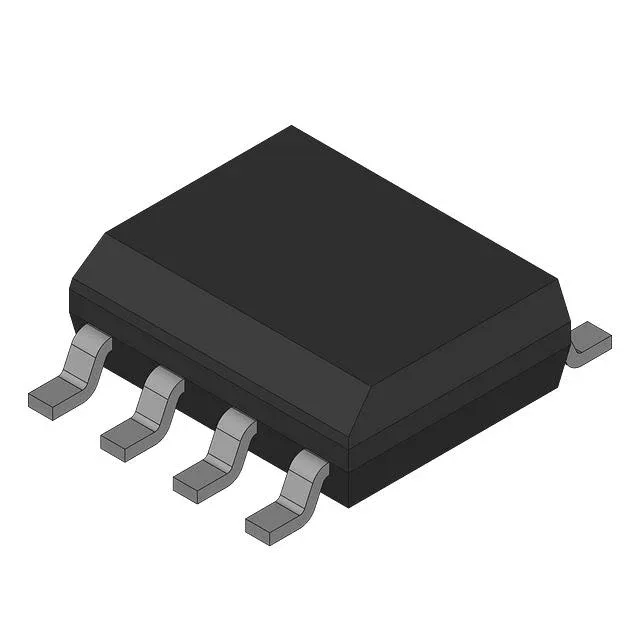
Package and footprint — 8-SOIC, surface mount
The layout is straightforward: decouple with a 0.1 µF ceramic cap as close to the supply pin as the trace allows. The 1:1 input-to-output ratio means one clock input generates one spread-spectrum output — no fan-out or divider on-chip. If the downstream device needs a divided clock, that happens externally.
Lifecycle and compliance — active, but RoHS non-compliant
RoHS non-compliant per the supplier listing — this part contains lead (Pb) above the 0.1 % threshold. For a BOM that requires RoHS-10 compliance, this part is a blocker unless an exemption (e.g., lead in solder for high-reliability equipment) applies.