What the 16 MHz ceiling and PLL mean on the bench
The CY25818SC is a spread spectrum clock generator with an integrated PLL, taking a clock or crystal input and producing a single clock output up to 16 MHz. The PLL locks onto the reference and modulates the output frequency to spread the radiated energy across a wider band, reducing peak EMI at the fundamental and its harmonics. The 1:1 input-to-output ratio and non-differential signalling keep the pinout simple — no external termination resistors for a differential pair.
Package and rework reality — 8-SOIC
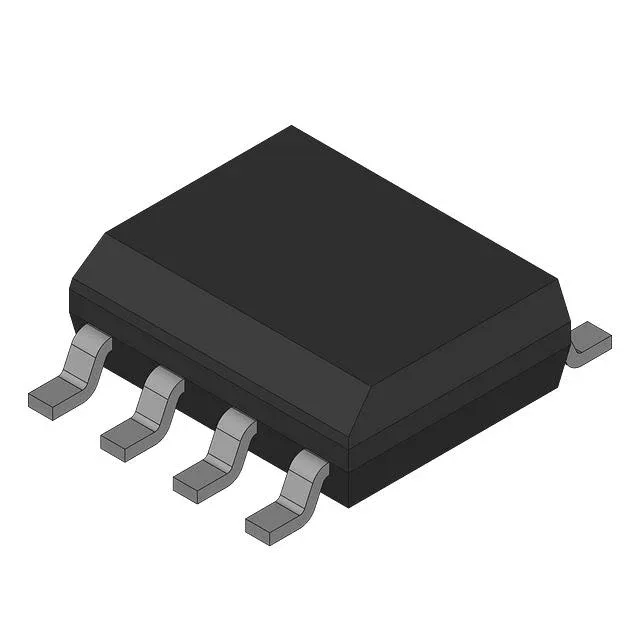
The gull-wing leads are visible for inspection, and the 1.27 mm pitch gives plenty of room for a fine-tip iron or hot-air nozzle without bridging adjacent pins. Pin 1 is marked by a chamfer on the package body — no ambiguity when placing it back after a rework cycle. Surface-mount soldering profile follows standard JEDEC MSL guidelines for SOIC packages. The bulk packaging means it ships in tubes or trays, not tape-and-reel — factor this into your pick-and-place feeder setup if you're running a reel-fed line.
The part is RoHS non-compliant per the listing, so check your assembly's regulatory requirements if you need RoHS exemption documentation. Sourced through independent distribution channels. No direct pin-compatible second source identified in this family — the CY25818SC's spread spectrum modulation profile and PLL architecture are specific to this order code.
This covers office equipment, consumer electronics, and most indoor industrial control panels, but not automotive or extended-temperature outdoor gear. The 0°C lower limit means it won't reliably start below freezing; if your system sees -20°C storage or startup, this part is outside its guaranteed operating range. The divider/multiplier function (Yes/Yes) allows the PLL to scale the input frequency up or down within the 16 MHz ceiling, so you can feed a lower-frequency crystal and still get the target output clock.