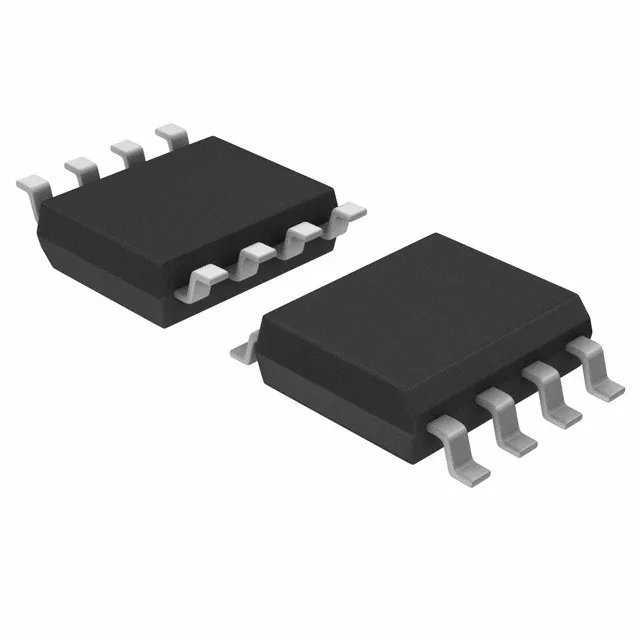
What this clock generator does on the board
The Infineon CY25560SXC is a single-output spread-spectrum clock generator with an integrated PLL. It accepts a clock or crystal input and produces a modulated output up to 100 MHz, reducing peak radiated emissions at the fundamental and harmonics. The spread-spectrum modulation spreads the output energy across a wider frequency band, lowering EMI peaks by several dB without adding ferrite beads or shielding cans. The 1:1 input-to-output ratio means one clock output.
100 MHz ceiling and what it covers
Maximum output frequency is 100 MHz.
Spread-spectrum benefit — fewer EMI components on the BOM
The spread-spectrum modulation is the key differentiator here. Instead of a clean carrier that concentrates all the energy at one frequency (and its harmonics), this generator spreads that energy. The result is a lower peak amplitude at the fundamental, which can reduce the need for common-mode chokes, ferrite beads, or board-level shielding. For a product chasing FCC/CE conducted-emission limits, this part can save a few dollars in filter components and a few square mm of board area.
The 8-SOIC footprint is standard and widely supported in assembly. No special PCB feature required beyond the usual decoupling capacitor close to the supply pin.