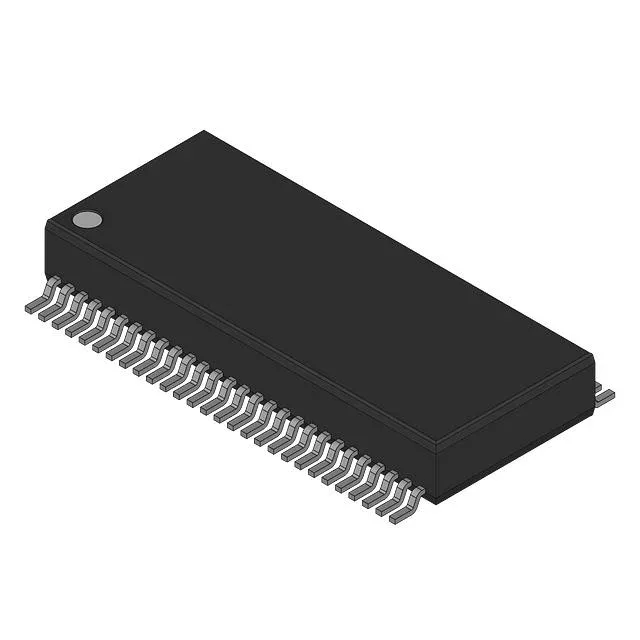
Infineon Technologies CY2220PVC-1 — Clock & Timing ICs

CY2220PVC-1 Clock Synthesizer, 1:27 Fanout, 48 MHz Max

MPNCY2220PVC-1
End of Life

Cypress CY2220PVC-1 Clock Synthesizer, Driver, PLL Yes, Input Crystal, Output Clock, 1:27 Ratio, 14.318MHz/24MHz/48MHz Max, 3.135V-3.465V, 56-BSSOP, 0°C-70°C.

$3.24Ref. price · indicative, final on quote
Packaging56-BSSOP (0.295", 7.50mm Width)
StockContact for availability
MOQ1 pcs
  • 100% new & originalTraceable channels only — no refurbs, no pulls, no remarked parts.
  • Date & lot codes on quoteStated per line before you commit; label photos on request.
  • MSL-compliant ESD packingMoisture-sealed bags with indicator cards; reels photo-verified.
  • PayPal buyer protectionPay by T/T, PayPal or Payoneer — card payments covered end to end.

Specifications

CY2220PVC-1 Technical Specifications
ParameterValue
TypeClock Synthesizer, Driver
Mounting typeSurface Mount
Voltage3.135V ~ 3.465V
Frequency14.318MHz, 24MHz, 48MHz
Operating temperature0°C ~ 70°C (TA)
PLLYes
InputCrystal
OutputClock
PackageBulk
Case56-BSSOP (0.295\", 7.50mm Width)
Divider (Multiplier)Yes/No
Number of circuits1
Ratio - Input:Output1:27
Differential - Input:OutputNo/Yes

Product details

What this clock synthesizer does that a basic PLL can't

The Cypress CY2220PVC-1 is a PLL-based clock synthesizer and driver that takes a single crystal input and fans it out to 27 clock outputs at three fixed frequencies: 14.318 MHz, 24 MHz, and 48 MHz. That 1:27 ratio means one crystal feeds an entire board's clock tree without cascading multiple PLLs — a common pain point when different peripherals need different reference clocks and the MCU's internal PLL doesn't have enough outputs. The outputs are differential-capable, which helps maintain signal integrity over longer PCB traces or when driving differential receivers directly.

Three output frequencies — why those numbers matter

The three output frequencies — 14.318 MHz, 24 MHz, and 48 MHz — are not arbitrary. 14.318 MHz is the legacy PC/AT colour-burst crystal frequency (3.58 MHz × 4), still used in some video and legacy-interface designs. 24 MHz is a common base frequency for USB, audio codecs, and many MCU PLL reference inputs. 48 MHz is the standard USB full-speed/high-speed reference. Having all three on one chip means a single crystal (typically 14.318 MHz) generates the other two via the internal PLL, saving board space and BOM cost. The 48 MHz output also doubles as a clean clock for a secondary processor or PHY.

Package and temperature — where it lives on the board

Housed in a 56-BSSOP (0.295", 7.50 mm width) — also referred to as 56-SSOP — this is a surface-mount part with a standard 0.65 mm pitch. Not rated for industrial or automotive use.

Lifecycle and sourcing

It remains a viable design-in choice for new BOMs. RoHS non-compliant, so it is not suitable for lead-free assembly lines unless you have a waiver or a separate RoHS-compliant variant.

Frequently asked questions

Is CY2220PVC-1 obsolete?

No. The CY2220PVC-1 is listed as Active. It is still a viable part for new designs.

What are the output frequencies of CY2220PVC-1?

These are generated from a single crystal input via the internal PLL.

Can CY2220PVC-1 be used with a 10 MHz crystal?

The datasheet specifies a crystal input, but the evidence does not list a supported crystal frequency range. The three output frequencies (14.318 MHz, 24 MHz, 48 MHz) are derived from the internal PLL, which is typically optimized for a specific reference frequency. Without a stated input range, you should verify compatibility in the full datasheet before committing the BOM.