What the 7 mOhm Rds(on) means at the bench
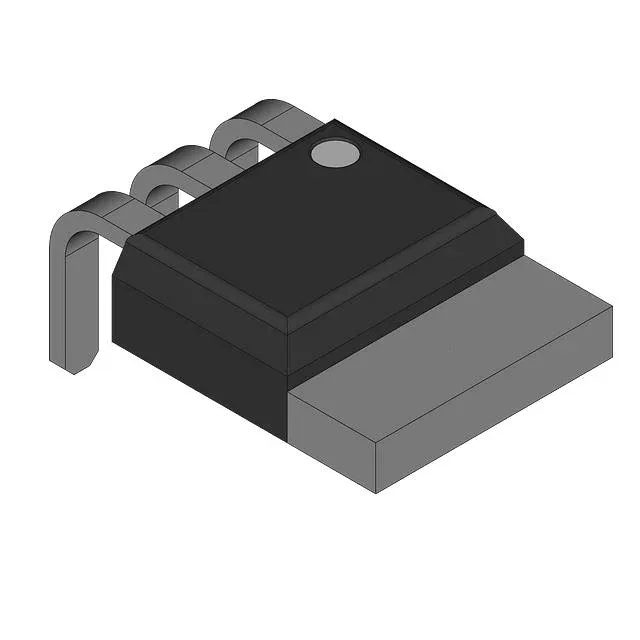
The AUIRF3808 is an N-channel HEXFET in a TO-220 through-hole package, rated for 75 V drain-source and 140 A continuous drain current. At 82 A the dissipation from Rds(on) alone is 47 W, which means the junction will climb fast unless the heatsink keeps the case below 100 °C. The 220 nC gate charge at 10 V tells you the driver must source about 2.2 A peak to switch the gate in 100 ns — a standard gate-driver IC with a 2 A sink/source rating is marginal here; budget a driver with at least 4 A peak capability for clean edges and to keep switching losses under control.
Automotive temperature grade and where it fits
The junction temperature range spans -55 to 175 °C, which is the full automotive Grade 0 band (AEC-Q101 equivalent). That means the part survives under-hood ambient peaks of 125 °C with the junction rising another 50 °C from self-heating — typical for an engine-cooling fan drive or an electric oil-pump inverter where the heatsink is shared with the engine block. The 330 W power dissipation rating is the theoretical maximum at a case temperature of 25 °C — in a real 85 °C under-hood environment, derate by the junction-to-case thermal resistance (typically 0.45 °C/W for a TO-220) so the practical continuous dissipation is closer to 200 W before the junction hits 175 °C.
Active lifecycle and sourcing posture
Sourcing is straightforward through authorized distribution channels; we quote it against your BOM quantity with confirmed lead time at RFQ. The HEXFET series has a long production history, so date-code spread across multiple lots is common. If your board requires a single date code for traceability, flag that at quote time — we can often consolidate from one production batch.