With an input bias current of 3 nA and an input offset voltage of 350 µV, this part is suited for precision analog signal conditioning in environments where temperature extremes and supply headroom matter — avionics, missile guidance, satellite telemetry, or downhole instrumentation.
40 V supply span and military temperature range
The 40 V supply span (single or split) gives the OP12GJ the headroom to handle large input common-mode swings and deliver a wide output swing without clipping. That matters when the signal chain runs on unregulated rails or needs to accommodate sensor outputs that ride on a high DC offset.
DC precision: input bias and offset
Input bias current of 3 nA and input offset voltage of 350 µV are the numbers a calibration technician checks first. For a general-purpose op-amp in a TO-99 can, these are respectable — not the lowest in the catalog, but well within what a precision integrator or a low-level transducer amplifier needs. If you are verifying a measurement chain against a traceable standard, the offset drift over temperature (not stated here) is the next thing to qualify; the room-temperature offset alone does not guarantee long-term stability.
Package and mounting: TO-99 metal can
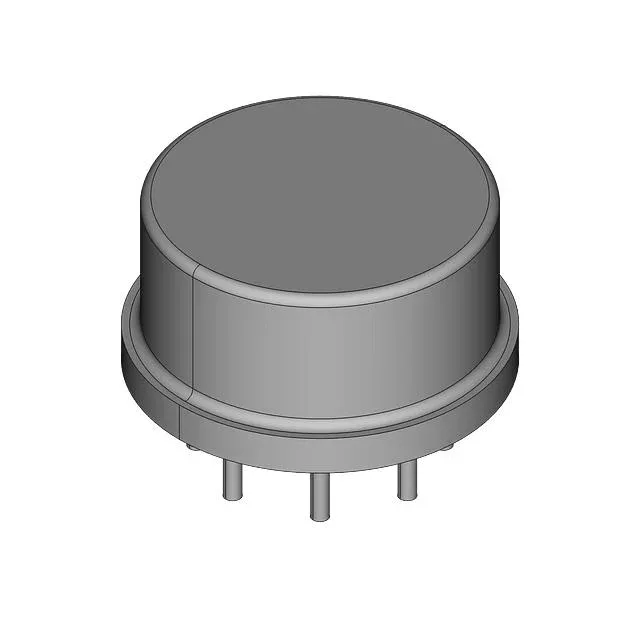
The TO-99-8 metal can is a hermetic package — a sealed metal enclosure that keeps moisture and contaminants out. That is why it shows up in high-reliability and defense programs. Through-hole mounting means it goes into a PCB socket or is soldered into plated through-holes; no reflow profile to manage, but the board layout needs the hole pattern and keep-out zone for the can diameter. Bulk packaging — no tape-and-reel, so plan for manual or tube-fed insertion.
The RoHS status is non-compliant, which is expected for a military-grade hermetic metal can part.