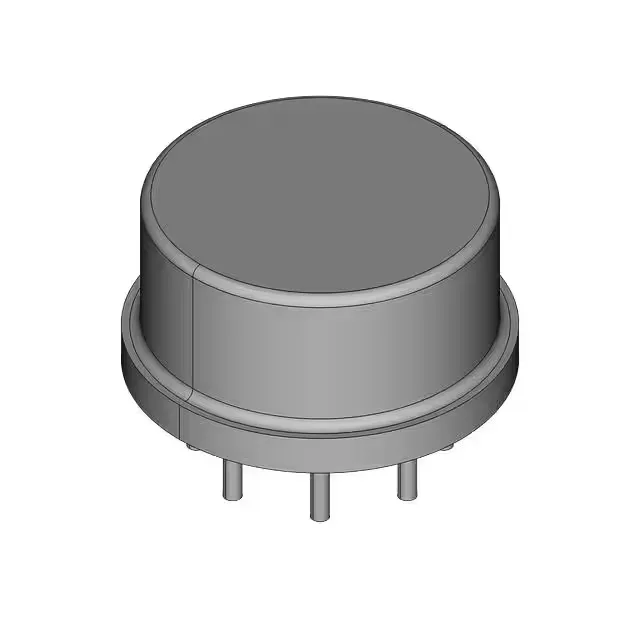
Analog Devices OP02DJ — Analog & Data Acquisition

OP02DJ General Purpose Op-Amp, TO-99 Metal Can, 1.3 MHz GBW

MPNOP02DJ
End of Life

Precision Monolithics OP02DJ, general purpose operational amplifier, single circuit, 1.3 MHz gain bandwidth, 0.5 V/µs slew rate, 10 V to 44 V supply, 0°C to 70°C, TO-99-8 metal can through-hole package.

$9.6Ref. price · indicative, final on quote
PackagingTO-99-8 Metal Can
RoHSRoHS non-compliant
Independent supplier — new & surplus stockAuthenticity-screened · ESD-safe packingListing updated Aug 2026

Specifications

OP02DJ specifications
ParameterValue
MountingThrough Hole
Amplifier typeGeneral Purpose
Voltage - input offset3 mV
Voltage - supply span44 V
Current - input bias30 nA
Operating temperature0°C ~ 70°C
Gain bandwidth product1.3 MHz
PackageBulk
Slew rate0.5V/µs
CaseTO-99-8 Metal Can
Number of circuits1

Product details

Hermetic TO-99 op-amp for legacy and sealed-envelope designs

The hermetic metal can package suits applications where moisture resistance, long-term reliability, or retrofit compatibility with existing TO-99 footprints matter — avionics instrumentation, test equipment, and sealed sensor modules. Input bias current is 30 nA typical, input offset voltage 3 mV typical.

The 10 V to 44 V supply span covers standard ±5 V to ±15 V bipolar rails and also single-supply operation up to 44 V, giving flexibility in existing ±15 V instrument designs or 24 V industrial control loops. For extended-temperature or automotive use, a different op-amp family with industrial or military rating would be needed.

This is relevant for sustaining legacy designs that depend on the TO-99 package and through-hole assembly — no forced redesign due to obsolescence.

Frequently asked questions

What is the OP02DJ equivalent to OP07?

The OP02DJ and OP07 are both general-purpose op-amps but differ in key ratings. The OP07 typically offers lower input offset voltage (75 µV typical) and lower input bias current (1 nA typical), while the OP02DJ has a 3 mV typical offset and 30 nA bias. They are not direct pin-compatible equivalents — verify the pinout against your PCB layout before substitution.