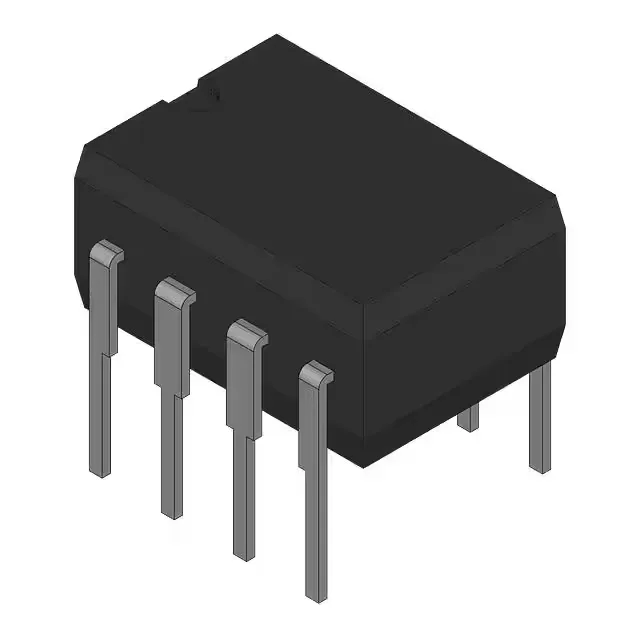
8-bit SAR ADC in a through-hole DIP
The MX7575JN is an 8-bit successive-approximation (SAR) ADC from Maxim Integrated, sampling at 200k samples per second with a single-ended input and parallel data interface. The 18-pin DIP package (0.300" width) is through-hole, which means it reworks easily under a soldering iron — no hot-air profile required, and pin 1 is clearly marked by the notch and dot on the body.
Sampling rate and interface fit
At 200k samples per second, this ADC is suited for low-to-moderate-speed data acquisition — think sensor readout, DC voltage monitoring, or audio-frequency digitization, not high-speed RF or video. The parallel data interface (8-bit wide bus) means the host microcontroller or FPGA reads the conversion result in one cycle — no SPI clocking overhead, but it uses more I/O pins than a serial ADC. The S/H-ADC configuration with a 1:1 ratio means the sample-and-hold captures the input voltage on the same clock edge as the conversion start — standard for SAR ADCs, but the acquisition time must be respected when driving the input from a high-impedance source.
Supply rails and temperature range
Both analog and digital supplies share the same 4.75V–5.25V range — a single 5V rail handles everything, but the analog supply must be clean (low ripple) to avoid noise coupling into the conversion. It is RoHS non-compliant (leaded solder), so verify your exemption or accept the leaded finish for legacy BOMs that require tin-lead compatibility.