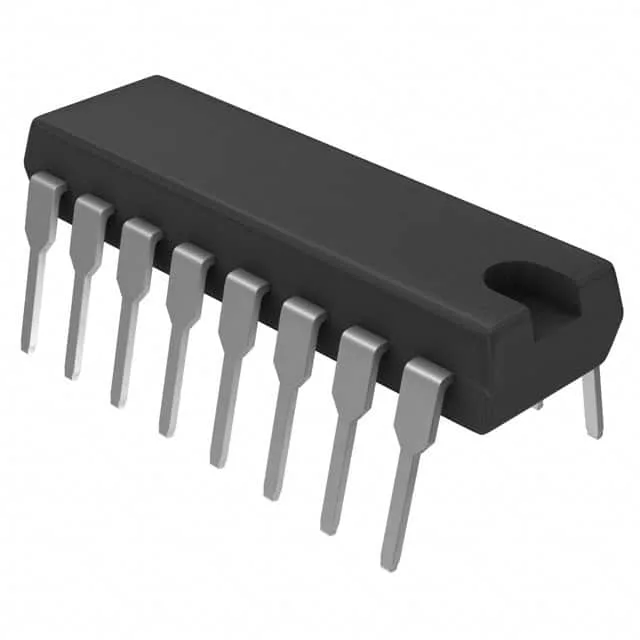
Analog Devices MX7523JN+ — Discrete Semiconductors

MX7523JN+ 8-bit DAC, 200ns, Voltage-Out, 16-DIP

MPNMX7523JN+
End of Life

Maxim Integrated MX7523JN+ 8-bit multiplying DAC, voltage-unbuffered R-2R output, 200 ns settling, parallel interface, 16-DIP through-hole package.

$11.26Ref. price · indicative, final on quote
Packaging16-DIP (0.300", 7.62mm)
RoHSROHS3 Compliant
Sourced new & surplus through independent channelsAuthenticity-screened · ESD-safe packingListing updated Aug 2026

Specifications

MX7523JN+ specifications
ParameterValue
Output typeVoltage - Unbuffered
MountingThrough Hole
Reference typeExternal
Voltage - supply, analog5V ~ 16V
Voltage - supply, digital5V ~ 16V
InterfaceParallel
Operating temperature0°C ~ 70°C
PackageTube
ArchitectureR-2R
Settling time200ns
Number of bits8
Case16-DIP (0.300\", 7.62mm)
Differential outputYes
Number of d (A converters)1

Product details

Active production — BOM-fit for legacy and new designs

The MX7523JN+: It settles to within 1/2 LSB in 200 ns typical, which places it in the mid-speed range for an 8-bit parallel DAC — fast enough for waveform generation up to a few MHz update rates, but not a video-speed part.

Supply rail and reference — single-supply simplicity

Both the analog and digital supply pins accept the same 5 V to 16 V range, so a single rail powers the entire converter — no separate AVDD/DVDD sequencing needed. The reference input is external, and the part supports differential output, which lets the designer set the full-scale range with a precision reference and reject common-mode noise at the load.

The MX7523JN+ carries ROHS3 compliance, covering EU RoHS exemption categories through the latest recast.

Frequently asked questions

What is the settling time of the MX7523JN+?

The MX7523JN+ settles to 1/2 LSB in 200 ns typical, which defines the maximum update rate for a given application — at 8-bit resolution, this supports conversion rates in the low-MHz range.

What is the output type of the MX7523JN+?

The MX7523JN+ provides an unbuffered voltage output from an R-2R ladder architecture — the output impedance is code-dependent, so a buffer amplifier is typically required when driving a low-impedance load.