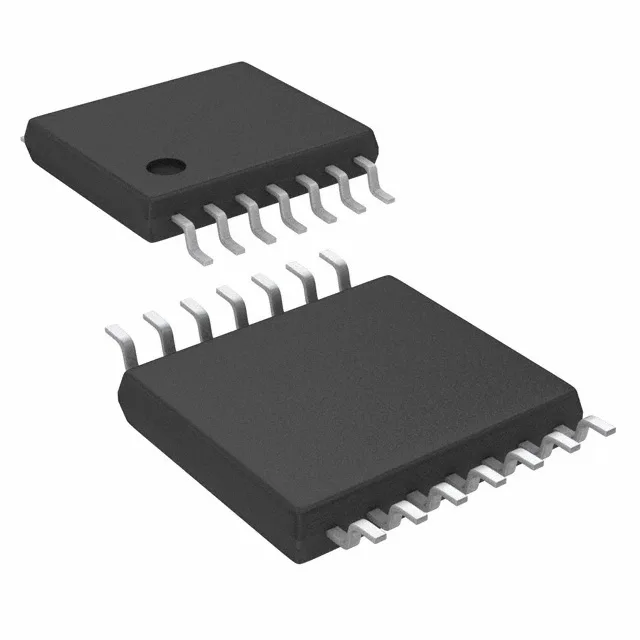
Analog Devices MAX995EUD+ — Analog & Data Acquisition

MAX995EUD+ Quad Comparator, 210 ns, 14-TSSOP

MPNMAX995EUD+
End of Life

Maxim Integrated MAX995EUD+, General Purpose quad comparator, 210 ns propagation delay, 96 µA quiescent current, 2.5 V to 5.5 V supply, CMOS/TTL output, 14-TSSOP, -40°C to 85°C.

$6.26Ref. price · indicative, final on quote
Packaging14-TSSOP (0.173", 4.40mm Width)
RoHSROHS3 Compliant
Independent supplier — new & surplus stockAuthenticity-screened · ESD-safe packingListing updated Aug 2026

Specifications

MAX995EUD+ specifications
ParameterValue
TypeGeneral Purpose
Output typeCMOS, Push-Pull, Rail-to-Rail, TTL
MountingSurface Mount
Voltage - input offset5mV @ 5.5V
Voltage - supply, single (Dual (±))2.5V ~ 5.5V, ±1.25V ~ 2.75V
Current - quiescent96µA
Current - input bias1pA @ 5.5V
Operating temperature-40°C ~ 85°C
PackageTube
Hysteresis±2.5mV
Case14-TSSOP (0.173\", 4.40mm Width)
CMRR, PSRR80dB CMRR, 80dB PSRR
Number of elements4
Propagation delay210ns

Product details

Quad comparator with built-in hysteresis for threshold detection

The Maxim Integrated MAX995EUD+ is a quad general-purpose comparator in a 14-TSSOP surface-mount package.

The built-in ±2.5 mV hysteresis eliminates the need for external positive feedback resistors to prevent output chatter near the threshold, saving two resistors per channel and simplifying the layout.

Low quiescent current for power-sensitive BOMs

The quiescent current is specified at 96 µA maximum for all four comparators combined. That is roughly 24 µA per channel, which keeps the power budget tight in battery-operated or always-on sensor nodes. The input bias current is just 1 pA at 5.5 V, so high-impedance sources like photodiode amplifiers or pH probes see negligible offset error from the comparator input.

Frequently asked questions

What is the propagation delay of MAX995EUD+?

The maximum propagation delay is 210 ns. This is the time from when the input crosses the threshold to when the output changes state, and it determines the timing margin in fast control loops or overcurrent detection circuits.