Quad general-purpose comparator with 28 ns propagation delay
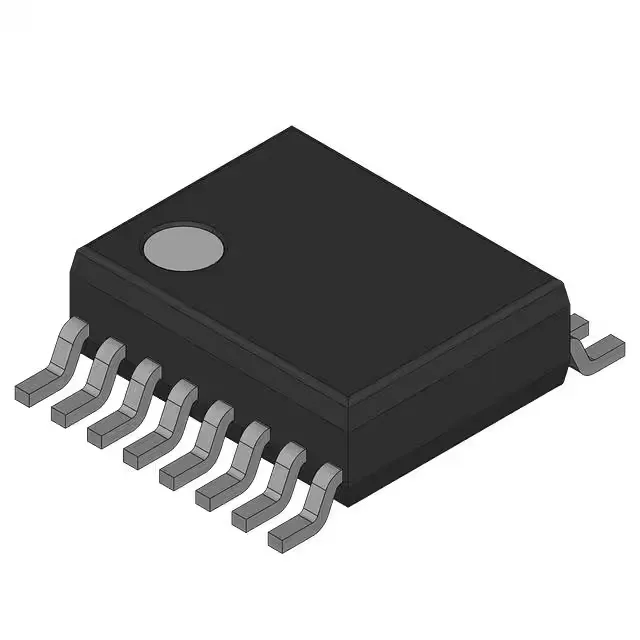
The Maxim Integrated MAX978EEE+ is a quad general-purpose comparator in a 16-QSOP package, built for signal threshold detection and level translation in industrial and mixed-signal systems. Each of the four comparators includes 4 mV of internal hysteresis, which eliminates output chatter near the trip point without external positive feedback resistors — a clean one-chip solution for zero-crossing detectors, window comparators, and over-voltage/under-voltage monitors. The push-pull, rail-to-rail output stage drives CMOS logic inputs directly; no pull-up resistor is needed, which saves a component per channel and simplifies the board layout. Propagation delay is 28 ns maximum, fast enough for switching power-supply fault latches and sensor thresholding at moderate frequencies, though not intended for GHz-level clock recovery or RF envelope detection. Supply range is 2.7 V to 5.5 V single supply, covering 3.3 V and 5 V logic rails. Quiescent current is 650 µA maximum across all four channels, so the total power budget stays under 3.6 mW at 5.5 V — low enough for always-on monitoring in battery-backed equipment.
95 dB CMRR and 100 dB PSRR — noise rejection in mixed-signal environments
Common-mode rejection ratio is 95 dB typical, and power-supply rejection ratio is 100 dB typical. These figures mean the comparator's trip point shifts less than 20 µV per volt of supply ripple or common-mode input variation — important when the comparator shares a rail with a switching regulator or sits on a long sensor cable that picks up ground noise. Input offset voltage is 2 mV maximum at 5 V, and input bias current is 0.075 µA maximum at 5.5 V. The low bias current allows the use of high-impedance sensor dividers without loading the source, and the offset is tight enough for 1% threshold accuracy with a 200 mV reference.
Surface-mount assembly on the 16-SSOP (0.154", 3.90 mm width) footprint is standard — no exotic soldering profile needed. The supplier device package is 16-QSOP, which is the same body size and pinout as the SSOP-16; the two designations refer to the same physical package from different suppliers.