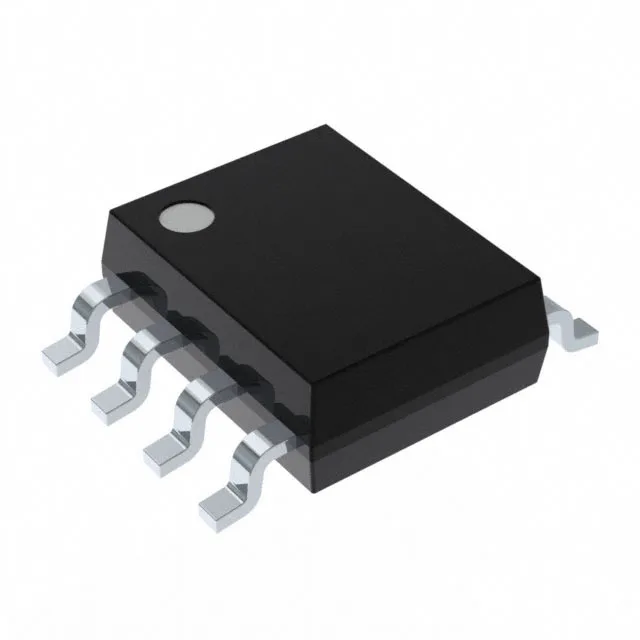
Dual comparator with on-chip reference — what that saves you
This is a Maxim Integrated dual comparator that integrates a voltage reference, so you do not need an external reference IC or resistor divider for the threshold. The internal reference is factory-trimmed, saving one or two passives and a reference IC from the BOM. The 50 mV of built-in hysteresis means you can skip the positive-feedback resistors that a plain comparator would need to avoid chatter on slow-moving signals — a real board-area and component-count win for threshold-detection circuits like battery monitors, over-voltage locks, or window comparators.
The 12 µs max propagation delay places this part firmly in the low-speed, low-power category. It is fine for DC threshold sensing, over-temperature flags, or power-good signals where the input changes in milliseconds. It is not suited for high-speed PWM current limiting, zero-crossing detection in a PFC stage, or any loop that needs sub-microsecond response. The 6 µA max quiescent current is the trade-off that makes it attractive for always-on monitoring in battery gear.
Supply range and output compatibility
The CMOS/TTL output swings rail-to-rail, so it drives logic inputs without a pull-up resistor. Input offset is specified at 10 mV max at 5 V, and the CMRR and PSRR both sit at 80 dB typical — adequate for the intended low-speed sensing role.
Surface-mount assembly with no exposed pad simplifies the PCB layout and reflow profile.