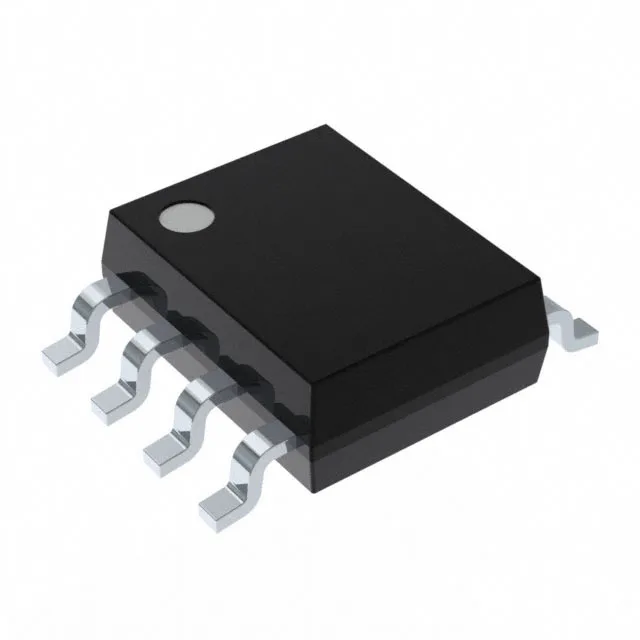
Comparator with a built-in reference — what that saves you
The reference is factory-trimmed, so the threshold stays consistent across temperature without calibration.
4 µA quiescent — sizing the always-on rail
Quiescent current maxes out at 4 µA, which is the number that matters for any circuit that stays powered during sleep or standby. At that draw, the comparator and reference together add less than 0.5% overhead to a 1 mAh battery over a month. The propagation delay is 12 µs maximum — fast enough for supply-rail monitoring and slow sensor thresholds, but not for high-speed PWM or zero-crossing detection. If you need sub-microsecond response, this is not the part.
Supply range and output — single-rail simplicity
The supply range covers 2.5 V to 11 V single supply, or ±1.25 V to ±5.5 V split supply. That 2.5 V floor means it runs on a 3 V lithium cell with margin. Output is CMOS/TTL compatible, so it drives logic inputs directly without a pull-up resistor. Input offset voltage is 10 mV max at 5 V, and the built-in 50 mV hysteresis prevents chatter on slow-moving signals.