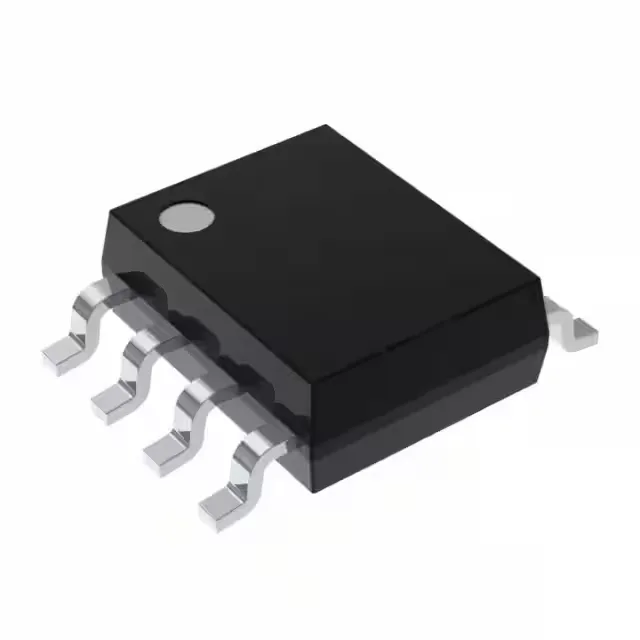
Dual low-power comparator in 8-SOIC
The MAX922CSA+ is a dual, low-power comparator from Analog Devices, built for general-purpose threshold detection and signal conditioning where supply current is the binding constraint. The CMOS/TTL output stage sinks or sources up to 50 mA, enough to drive a logic input directly or switch a small load without a buffer transistor.
Speed and precision for threshold detection
Propagation delay is 12 µs maximum — this is a low-speed comparator, not a high-frequency zero-crossing detector. It suits DC threshold alarms, battery undervoltage lockout, or slow-slew sensor comparators where the 12 µs delay is well within the system timing budget. Input offset voltage is 10 mV maximum at 5 V, and the common-mode rejection ratio and power-supply rejection ratio both sit at 80 dB typical. It is not qualified for industrial or automotive ambient extremes — the part lives in indoor, temperature-controlled equipment.
The supplier device package is 8-SOIC, surface-mount, and ships in Tube format. The 8-SOIC footprint is a straightforward hand-solder or reflow job. It will survive a hot-air rework cycle if you keep the air temperature under 350°C and preheat the board — lift the part, not the pad.