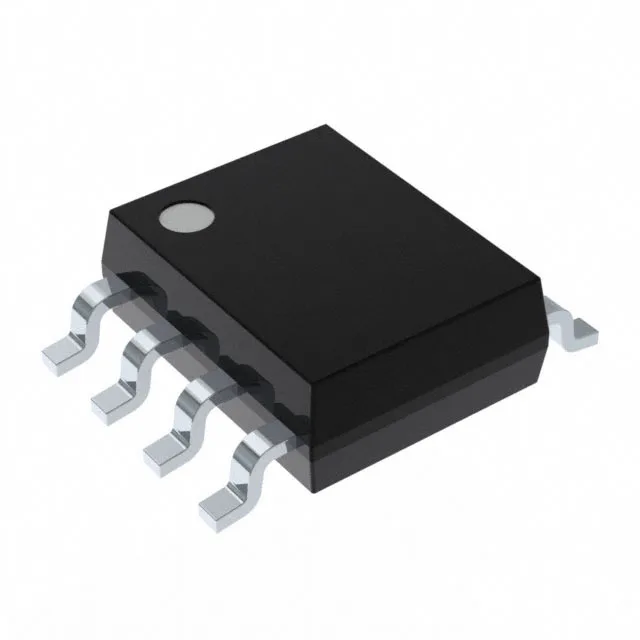
Dual comparator with 50 ns propagation delay — timing budget for the signal chain
The Maxim MAX907CSA+T is a dual, general-purpose comparator that delivers a 50 ns maximum propagation delay, making it fast enough to handle edge-rate discrimination in high-speed signal chains, zero-crossing detectors, and line receivers. The TTL-compatible output stage sinks and sources logic levels directly without a pull-up resistor, saving a component on the BOM. Each of the two comparators draws from a single supply rail between 4.5 V and 11 V, or from split supplies, so the same part works in a 5 V or 10 V system without a secondary regulator.
Commercial temperature range — indoor, controlled environments
It is not specified for industrial enclosures, engine bays, or outdoor telecom cabinets that see −40°C or +85°C extremes. The 86.02 dB typical CMRR and PSRR keep the threshold stable against supply ripple and common-mode shifts within the commercial range.
Maximum input offset voltage is 2 mV at 5 V, and maximum input bias current is 0.3 µA at 5 V. For a simple over-voltage detector with a resistor divider, the 2 mV offset translates to roughly 0.04% of a 5 V reference — negligible in most threshold circuits. The 0.3 µA bias lets you use high-value feedback resistors (hundreds of kΩ) without introducing a significant voltage error across the divider. Quiescent current maxes at 1 mA per package, not per channel, so the dual comparator burns about 1 mA total at no load.
Store the reels dry — MSL level is not stated in this listing, but an 8-SOIC is typically MSL 1 or 2; if the moisture-barrier bag is intact, no bake is needed before reflow.