28µs propagation delay — fast enough for most threshold loops
It is not a high-speed part for RF envelope detection or fast-switching regulators — that would call for a sub-100ns comparator — but for general-purpose threshold monitoring it is well within the timing budget.
2µA quiescent current — keeps the power budget lean
The quiescent current per comparator is 2µA maximum, which matters when the circuit is always-on — battery-backed alarm thresholds, remote sensor nodes, or energy-harvesting triggers. The low bias current of 0.001µA at 5V means the input impedance is high enough to work directly with high-resistance sensor bridges without loading the signal.
Built-in 4mV hysteresis — no external feedback network needed
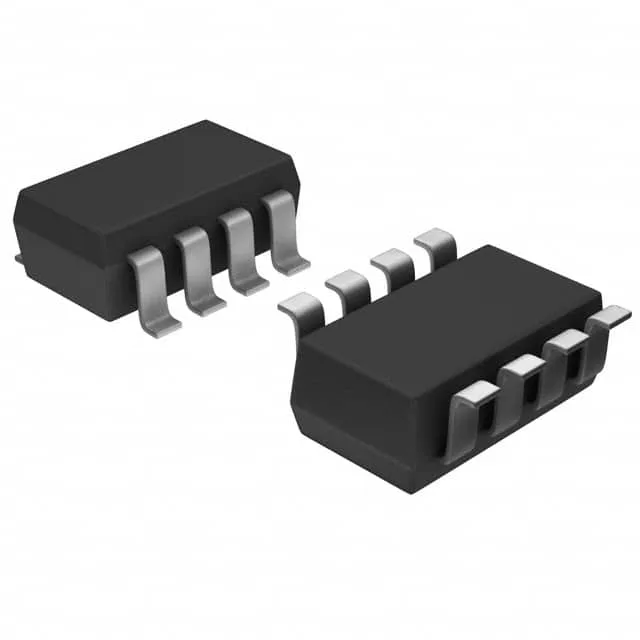
The 4mV internal hysteresis eliminates the need for a positive-feedback resistor pair around the comparator to prevent output chatter when the input signal crosses the threshold slowly. That saves two resistors per channel and simplifies the layout — a practical advantage when board space is tight in the SOT-23-8 footprint.