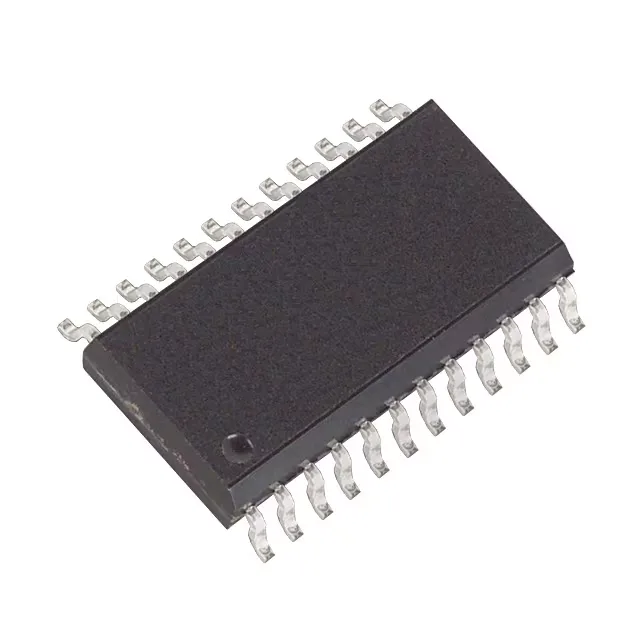
Analog Devices MAX7318AWG+ — Logic ICs

MAX7318AWG+ I²C 16-Bit GPIO Port Expander, 400 kHz

MPNMAX7318AWG+
End of Life

Maxim Integrated MAX7318AWG+, 16-bit I²C/SMBus GPIO port expander, 400 kHz clock, push-pull outputs, 31 mA source / 43 mA sink, 2V to 5.5V supply, -40°C to 125°C, 24-SOIC package, Tube.

$6.07Ref. price · indicative, final on quote
Packaging24-SOIC (0.295", 7.50mm Width)
RoHSROHS3 Compliant
Sourced new & surplus through independent channelsAuthenticity-screened · ESD-safe packingListing updated Aug 2026

Specifications

MAX7318AWG+ specifications
ParameterValue
Output typePush-Pull
MountingSurface Mount
Voltage2V ~ 5.5V
Current - output source (Sink)31mA, 43mA
Frequency400 kHz
InterfaceI²C, SMBus
Operating temperature-40°C ~ 125°C
PackageTube
FeaturesPOR
Number of i (O)16
Case24-SOIC (0.295\", 7.50mm Width)
Interrupt outputYes

Product details

It operates across a 2V to 5.5V supply range, making it equally at home on 3.3V or 5V logic rails without level shifters. Each pin can source 31 mA or sink 43 mA — enough to drive LEDs, small relays, or signal-level loads directly. The interrupt output (IRQ) signals the host on pin-state changes, so the main MCU doesn't have to poll. With a 400 kHz clock rate, the bus transaction for a full port read or write completes in roughly 40 µs, which is fast enough for front-panel buttons, status LEDs, and sensor-bank multiplexing.

Industrial temperature range — not just a box-tick

The 125°C upper limit covers self-heating inside a sealed enclosure on a hot production floor. If your BOM runs at 85°C ambient with a 20°C rise inside the enclosure, you still have 20°C of margin before the part leaves its rated window.

Active lifecycle — no LTB scramble needed

For production builds, it can be dual-sourced against the PCA9535 family if the design already uses that footprint — the I²C address map and register layout differ, so a firmware change is required, but the pinout is compatible.

Package and handling notes

The 24-SOIC footprint is shared by many 16-bit I²C expanders, so board layout reuse across alternate sources is straightforward. No exposed pad — all dissipation goes through the leads.

Frequently asked questions

What is the closest pin-compatible alternative to the MAX7318AWG+?

The PCA9535 from NXP/TI is a pin-compatible 16-bit I²C GPIO expander with the same 24-SOIC footprint and 400 kHz bus speed. The register map and I²C slave address assignment differ, so a firmware port is required, but the hardware layout can remain unchanged.

Is the MAX7318AWG+ compatible with 5V logic and industrial temperature ranges?

Yes.