16 I/O ports over two wires — what the I²C expander buys you
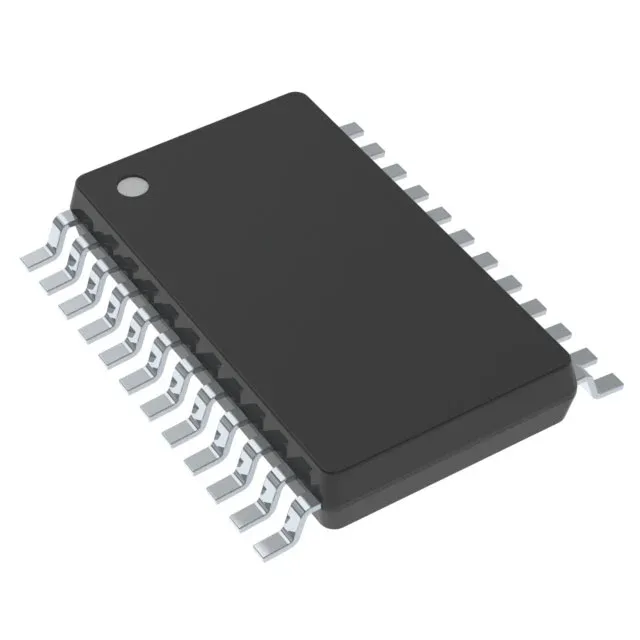
The Maxim Integrated MAX7312AUG+ is a 16-bit I²C/SMBus GPIO expander in a 24-TSSOP package. It gives a microcontroller 16 additional push-pull digital I/O lines using only two bus wires (SCL, SDA) plus one interrupt line back to the host. Each port can sink 43 mA or source 31 mA, enough to drive LEDs directly or switch a small relay coil through a transistor. The POR (power-on reset) feature ensures all outputs start in a known state — no glitching on the rails during power-up, which matters when the expander controls enable pins or power-good signals.
Supply voltage and temperature — where this part lives
If your BOM already carries other parts rated for 125°C, this expander keeps the thermal budget consistent.
400 kHz I²C bus — timing margin and interrupt handling
The interface runs at 400 kHz (Fast-mode I²C). On a bus with multiple slaves, the 16-port expander adds about 2.5 µs of latency per transaction — fast enough for polling LED banks or reading switch panels at a 100 Hz update rate. The dedicated interrupt output (INT) lets the host sleep between events instead of polling, cutting average bus traffic and MCU wake cycles.
Package and footprint — 24-TSSOP
Housed in a 24-TSSOP (4.40 mm body width, 0.65 mm pitch), the part is a direct-fit replacement for the industry-standard 24-pin TSSOP footprint used by many 16-bit I²C expanders. The surface-mount package suits reflow assembly with standard lead-free profiles. No exposed pad — so the thermal path is through the leads only, adequate for the sub-100 mA total current this part typically handles.
The date-code and marking consistency can be verified against Maxim's factory records as part of the sourcing process.