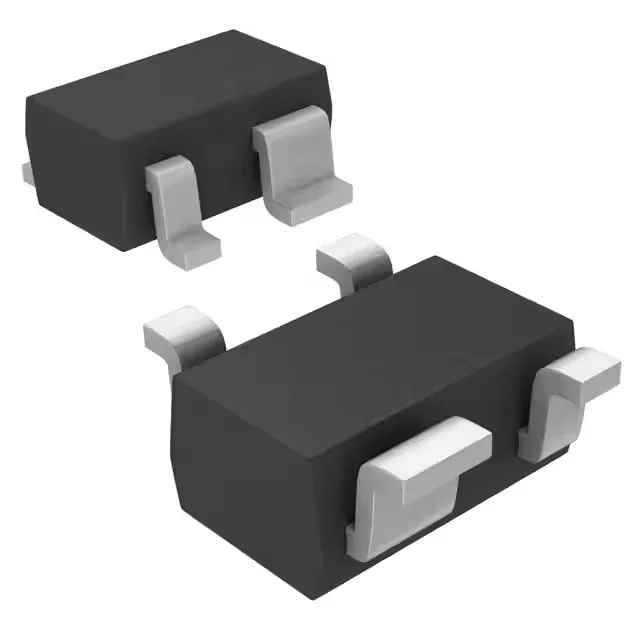
The Maxim Integrated MAX6835HXSD3+T is a simple reset/power-on reset IC that monitors a single voltage rail and holds the system in reset until the supply stabilizes. It asserts a logic-low reset signal when the monitored voltage drops below the 1.665V threshold and keeps it low for a minimum of 140ms after the rail recovers. The push-pull output drives the reset input of an MCU, DSP, or FPGA directly — no external pull-up resistor needed.
1.665V threshold — the rail it watches
The 1.665V threshold monitors a single voltage rail. This part triggers reset when the rail sags to 1.665V, which is early enough to prevent data corruption but late enough to avoid nuisance resets during normal ripple.
140ms reset timeout — why that number matters
If your system uses a crystal oscillator with a slow start-up — common in low-power MCUs — this timeout covers the window. Shorter timeouts risk an incomplete power-up; longer ones delay the system ready signal. The 140ms figure is a middle-ground choice for most industrial and embedded designs.
Active-low push-pull output — no external parts
The active-low reset output (RESET bar) pulls low during fault and releases high when the supply is good. Because it is push-pull, it sources and sinks current — you connect it straight to the processor's reset pin without a pull-up resistor. This saves one component and one trace on a dense board. The totem-pole stage also drives the reset line cleanly, reducing noise coupling into the reset input.