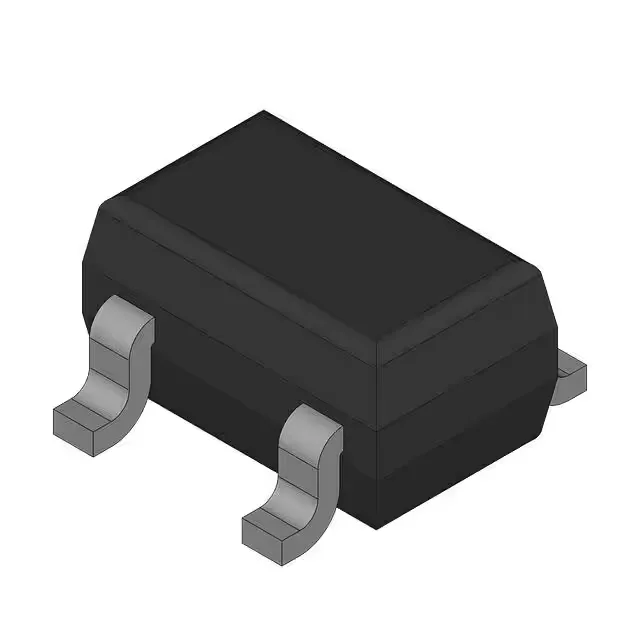
The MAX6712MEXS-T: The output is push-pull, totem-pole, active-low — it drives low on fault and returns high once the timeout expires, eliminating the need for an external pull-up resistor. The SC-70-4 (SC-82A, SOT-343) package footprint is 2.0mm × 1.25mm, with 0.65mm pitch — a compact option for dense PCBs.
Threshold and timeout — what they mean for the rail
The 4.38V threshold targets a 5V rail — the reset asserts when the supply dips to approximately 87.6% of nominal, which is typical for supervisor ICs monitoring a 5V ±10% bus. The 140ms minimum reset timeout ensures the downstream processor or FPGA sees a clean reset pulse long enough to complete a full power-on reset cycle, even if the supply glitches briefly. Because the output is push-pull, the reset signal drives directly into the microcontroller reset pin without a pull-up resistor — saves one component and simplifies layout. Active-low polarity matches the common reset input convention on most MCUs and SoCs.