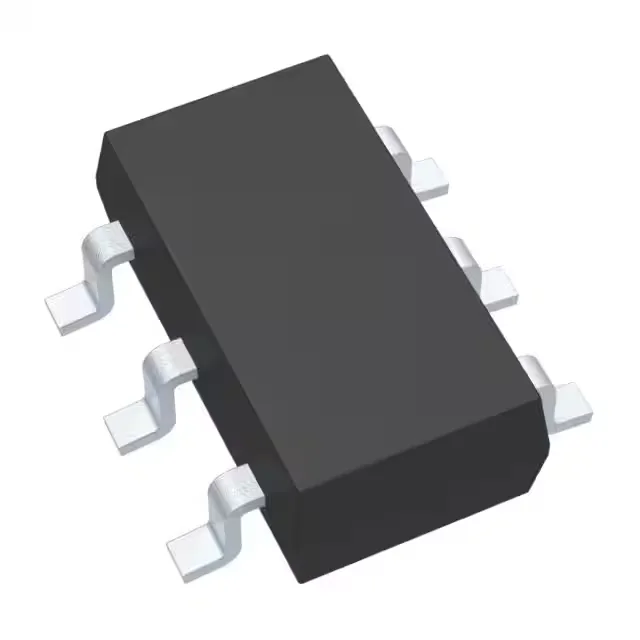
The MAX6611AUT+T comes in a 6-pin SOT-23 package (SOT-6 supplier device package), surface-mount. The 0.95 mm pitch and 2.9 mm body width fit a standard two-layer board without via fan-out — the thermal pad is the die attach, not an exposed paddle, so the copper pour under the part is the primary heat path. The Tape & Reel or Cut Tape packaging options let you order for prototype or production volume.
Accuracy and temperature range — the real fit decision
That wider tolerance matters if you are monitoring an engine bay or a cold-start environment — the sensor's own error plus the ADC reference drift in the downstream controller sets the system-level temperature uncertainty. Budget the ±5°C worst-case into your alarm thresholds, not the ±1.2°C typical. Resolution is 16 mV/°C — a 10-bit ADC on a 5 V reference resolves about 0.3°C per LSB, so the sensor's analog output is not the limiting factor in most MCU-based designs. The output is a linear analog voltage, so no digital interface overhead; the trade-off is that the trace from the sensor to the ADC must be kept short and away from switching noise to avoid injecting error.
Supply and shutdown — power budget considerations
The shutdown mode (a logic-level pin on the SOT-23-6) drops the quiescent current to near-zero, which is useful for battery-powered loggers or systems that only need temperature data on a polled schedule.