Active production — the first sourcing gate
The MAX6468XS16D3: One constraint: the part is RoHS non-compliant. For designs that require RoHS conformance — most EU-market consumer and industrial goods — this supervisor may need a waiver or a compliant alternative. Confirm the BOM's RoHS requirement before committing the line.
Threshold and timeout — the two numbers that decide fit
The reset threshold is 1.575V — this is the voltage at which the supervisor asserts reset on the monitored rail. For a 1.8V or 3.3V core supply, the 1.575V trip point sits well below the nominal rail, giving margin for brownout detection without nuisance resets on normal ripple. Reset timeout is 150ms minimum — after the monitored voltage rises above 1.575V, the output stays low for at least 150ms before releasing. That window covers the processor's oscillator start-up and PLL lock time; a supervisor with a shorter timeout could release reset before the clock is stable. Output is push-pull, totem pole, active low — the reset signal drives low on fault and high on release, with no external pull-up resistor needed. The push-pull stage sinks and sources current, which is the standard interface for most MCU and SoC reset inputs.
Temperature grade and package — where this part fits on the board
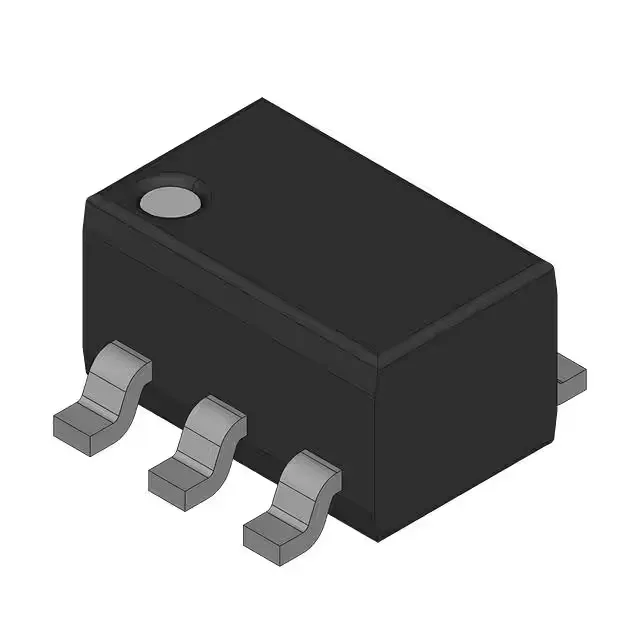
This supervisor can sit in an engine-bay ECU, an outdoor telecom enclosure, or a factory-floor controller without commercial-grade derating. Packaged in SC-82A/SOT-343, with the supplier device package listed as SC-70-4. Four-lead SOT with a 0.65mm pitch typical — the footprint is compact enough for space-constrained designs but still hand-solderable with a fine tip. The pinout is the standard reset supervisor layout: GND, RESET, VCC, and a no-connect or MR pin depending on the variant.