What the 2.93V threshold means for your rail
The MAX6362HUT29-T monitors a single supply rail and asserts a reset when the voltage drops below 2.93V. That threshold is set for 3.0V or 3.3V logic rails where the system needs to hold reset before the downstream devices brown out — at 2.93V a 3.3V rail has already lost about 11% margin, so the supervisor catches the dip before the processor's own POR threshold (typically 2.6-2.8V) triggers an uncontrolled state. The reset output is active high with an open-drain structure. Active high is less common than active low for supervisor ICs — it means the reset pin goes high when the monitored voltage is good, and pulls low during a fault. The open-drain output needs an external pull-up resistor to the logic supply rail; without it the reset signal floats and the downstream device never sees a valid logic level.
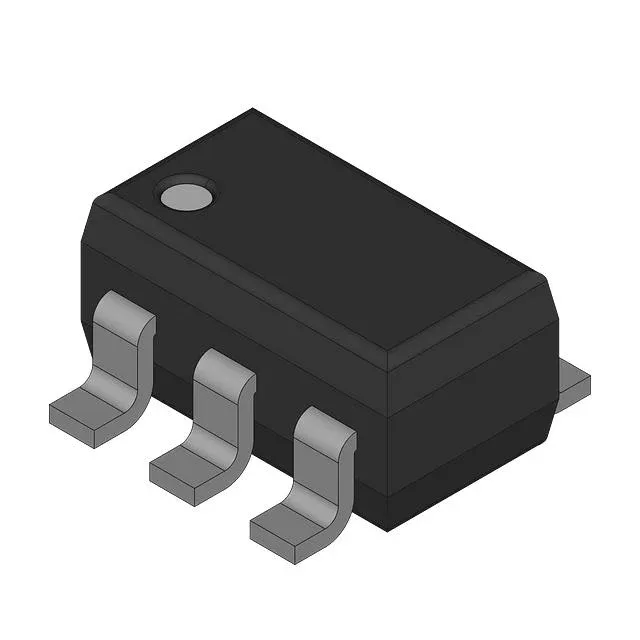
SOT-23-6 package — rework and board-fit reality
The SOT-23-6 footprint is standard — no exposed pad, no thermal-via requirement — so it drops into a two-layer board without layout changes.
Lifecycle and compliance — active but RoHS non-compliant
For BOMs that require full RoHS compliance, a lead-free variant from the same family (MAX6362HUT29+T) would be the drop-in alternative with the same threshold and package. The reset timeout is 150 ms minimum, which gives the power supply time to stabilize before the processor starts executing code — typical for systems with bulk capacitance on the output rail.