Eight channels, one SSOP — the board-fit story
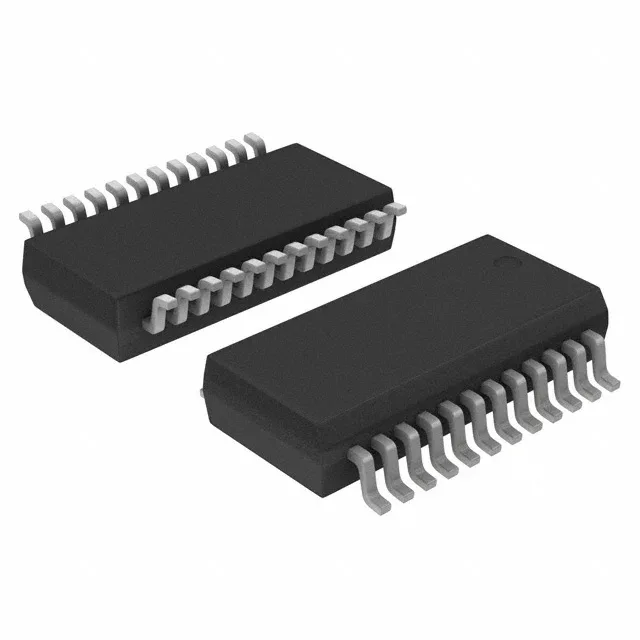
The MAX528EAG+ packs eight 8-bit DACs with voltage-buffered outputs into a 24-SSOP (5.30 mm body width, 0.209-inch pitch). That is a dense analog output array for a single IC — each channel has its own output amplifier, so the external bill of materials stays lean: just the reference and decoupling caps. The SPI data interface handles all eight channels over a shared bus — the update rate is limited by the 3 µs settling time per channel, so a full eight-channel write takes roughly 24 µs plus SPI overhead. For applications scanning outputs at 10 kHz or slower, this part keeps up without a glitch.
Supply rails and temperature — what the industrial grade means
The digital supply shares the positive rail range. That dual-supply architecture gives the output amplifiers headroom to swing near the rails — useful when the load needs a true zero-to-positive range without a pull-down resistor. The R-2R architecture combined with ±0.3 LSB INL and DNL means monotonicity is guaranteed across the temperature range — no missing codes at the cold or hot end.